The Maastricht Treaty
A milestone of European integration: the treaty on the European Union was signed in Maastricht on 7 February 1992, and it entered into effect on 1 November 1993. What is the subject of this treaty? And how does it benefit the people of Germany? A summary.
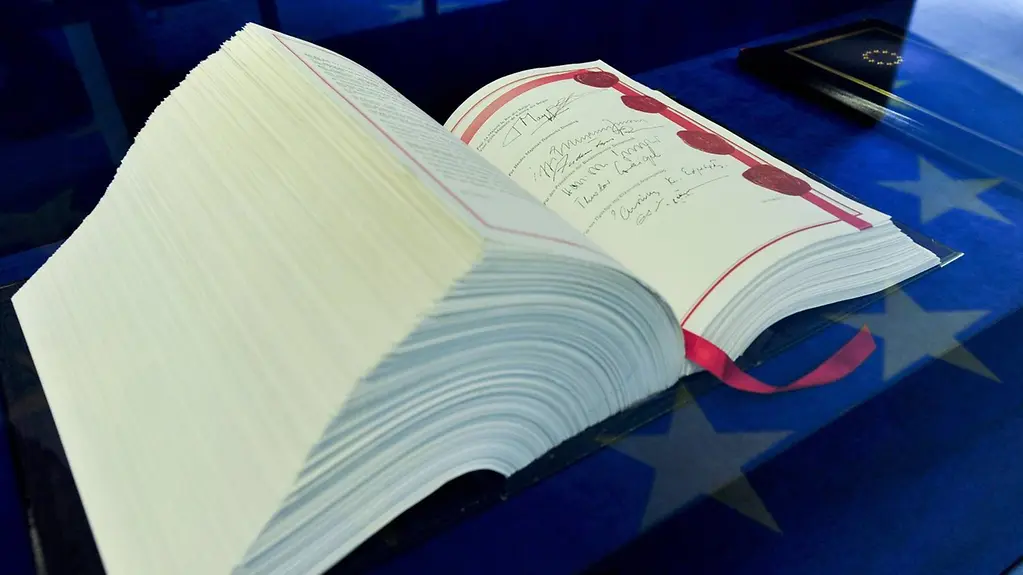
The Maastricht Treaty – a document of outstanding importance in the European unification process.
Foto: imago/Xinhua
It was a historic moment: the Maastricht Treaty came into effect on 1 November 1993. It laid the foundation of the European Union in its current form. On 7 February 1992, the heads of state and government of the EU states signed the Treaty on European Union in Maastricht. For Germany, the document was signed by Finance Minister Theo Waigel and Foreign Minister Hans-Dietrich Genscher.
What is the subject of the Maastricht Treaty?
The signing of the treaty was a historic moment in the process of European unification: while economic interests originally determined the central core of the Union, the EU Treaty provided the basis for the European Community to develop into a political union. Members committed themselves not only to economic collaboration but to close political cooperation as well.
The following details were agreed on:
- Introduction of European citizenship
- Common foreign and security policy
- Cooperation in justice and domestic policy
In addition, the EU member states laid the foundations for the common European currency. The euro was introduced in January 2002 and has since facilitated exchange between EU countries. There are no currency exchange charges, and prices can be compared directly across Europe. 20 of the 27 EU member states now make up the Eurozone.
What are the “Maastricht criteria”?
The Maastricht Treaty also sets out the “Maastricht criteria”. These define thresholds for debt, deficit, inflation, exchange rate and interest rates.
All states that have joined or wish to join the euro area must comply with these criteria. For example, annual new debt may not exceed three percent of GNP and total debt may not exceed 60 percent of GNP. Deficit procedures are initiated against member states that do not comply with these criteria, and fines can be imposed as a result.
How does the treaty benefit the people of Germany?
- Freedom to travel, live and work anywhere: The Maastricht Treaty introduced citizenship of the Union as well as further enhancing freedom of movement within the EU. The treaty grants right of residence to all Union citizens, rather than mainly to employees, freelancers, pensioners and students, as had been the case previously. This was a significant step towards realising the common market that greatly facilitates not only commercial exchange but also personal mobility within the EU.
- Prosperity and jobs: With free trade in the EU, there are no more trade restrictions, tariffs or border controls. As a traditional export nation, Germany benefits greatly from this: one in four jobs in Germany depends on export. The EU countries are Germany's most important trade partners, since more than half of German exports go there.
- Uniform minimum standards: Consumers can rely on the same minimum standards of quality, safety and health in all member states due to overarching EU consumer protection rules. For example, ingredients and components must be listed on all food sold in the EU – which greatly benefits allergy sufferers.
- Peace: Never before has there been such a long period of peace in Germany. The institutions of the European Union have contributed significantly to this.
Russia’s attack on Ukraine marks a turning point for Europe and the European peace order. Our contributions to ensuring stability, peace and security in Europe are a joint effort. Any disagreements concerning matters related to security must be resolved through dialogue based on reciprocity and international law. We will always strive to find peaceful solutions to any conflicts.