One year of the Federal Government

  • Home Page
  • Chancellor 

  • Federal Government

  • News

  • Service

  • Media Center

One year of the new Federal Government

The new Federal Government has resolutely tackled numerous challenges within a year – with the aim of comprehensively modernising the country. Economic strengths are being expanded and weaknesses reduced. The Federal Government is also increasing security and strengthening cohesion. It has already adopted the following measures and laws in the first twelve months:

  • July 2026

    • The Jobcentre logo.

      The aim of the new basic income support is to make social benefits fairer. 

      Photo: picture alliance / ZB

      31.07.

      At the beginning of July, among other things, the new basic security will come into force and the appointment of a lawyer will no longer be mandatory in cases of detention pending deportation and custody to secure departure.

  • June 2026

  • May 2026

    • A person refuelling a vehicle at a petrol station.

      The Federal Government is easing the burden on consumers and businesses when it comes to petrol prices.

      Photo: Getty Images/alvaro gonzalez

      31.05.

      In order to cushion the sharp rise in fuel prices as a result of the Iran-Middle East conflict, the coalition government has decided to reduce the energy tax on diesel and petrol by around 17 cents per litre of fuel for two months. The relief applies for May and June 2026. 

  • April 2026

    • A hospital corridor with a nurse pushing a trolley. The corridor is empty and the sun is shining through the windows.

      One of the aims of the hospital reform is to ensure hospital care in rural areas.   

      Photo: Shutterstock/Sutipond Somnam

      30.04.

      Based on the recommendations of the Healthcare Finance Commission, the Federal Government has introduced a draft law to stabilise contribution rates. The goal: stabilise contribution rates in the statutory health insurance system in the long term and at the same time continue to ensure a high level of healthcare. To this end, a package of measures was adopted to distribute the burden. Everyone must make a contribution – doctors, hospitals, pharmacies, manufacturers, insured persons and employers.

      The Hydrogen Acceleration Act has been in force since the beginning of April and improves planning and authorisation procedures for a faster development of the hydrogen infrastructure. The Hospital Reform Adjustment Act has also been in force since mid-April. 

      The cabinet also approved IP address retention, digital powers for the police and law enforcement agencies, more tenant protection for furnished flats, index-linked rents, short-term rental agreements and grace period payments, as well as standardised EU rules on the cyber security of products with digital elements. The Federal Government also passed a bill to reform emergency care. 

  • March 2026

    • A young mother is holding a newborn baby in her arms; the father is standing behind them.

      The cabinet has decided to introduce child benefit without an application in order to ease the burden on parents. 

      Photo: Getty Images/Cavan Images RF

      31.03.

      The amended Aviation Security Act on drone defence and the KRITIS (Critical Infrastructure) Umbrella Act on the protection of critical infrastructure came into force in March. The Federal Cabinet also approved child benefit without an application, the right to repair defective products, the expansion of psychosocial support for victims of serious crimes and the data centre strategy – for more computing power for Germany. The cabinet has passed the Medical Register Act in order to make health data more usable. The governing coalition also adopted the climate protection programme.

  • February 2026

    • A chatbot icon in a speech bubble

      Germany as a business location should be able to benefit more from the use of AI.

      Photo: Getty Images/Witthaya Prasongsin

      28.02.

      After the classification of safe countries of origin came into force at the beginning of the month and the law on accelerated procurement for the German Armed Forces in the middle of the month, the cabinet also approved the action plan to combat organised crime, the reform of the Disability Equality Act and the implementation of the AI Regulation, which is intended to enable more innovation.

  • January 2026

    • The image shows a gas cylinder and a pressure gauge. The needle indicates a medium level.

      All consumers will benefit from the abolition of the gas storage levy.

      Photo: picture alliance/Sven Simon

      31.01.

      At the beginning of the year, the Federal government reduced energy costs by providing a federal subsidy for grid fees, abolishing the gas storage levy and reducing the electricity tax for around 600,000 companies in the manufacturing, forestry and agricultural sectors. The Commission on Welfare State Reform has presented its report. The 2025 pension package , the Second Company Pension Reinforcement Act and the active pension also came into force – as did the extension of the maximum entitlement to short-time working allowance and the Parcel Carrier Protection Act. 

      On 1 January 2026, the commuter allowance rose permanently to 38 cents from the first kilometre – and the statutory minimum wage to 13.90 euros gross per hour. The New Military Service also came into force. The Federal Cabinet passed the Tax Consultancy Act to reduce bureaucracy in everyday life. 

  • December 2025

    • The photo shows two people who have laid out financial documents and a calculator on a table.

      A private pension plan can help to close potential pension gaps in retirement.   

      Photo: Getty Images/iStockphoto/PeopleIm

      31.12.

      The NIS-2 Implementation and Cyber Security Strengthening Act for more digital security came into force at the beginning of December, and later in the month the Geothermal Energy Acceleration Act for faster expansion and better utilisation of geothermal energy. 

      The Federal Cabinet also decided on the reform of private pension provision, key points of the early retirement pension for young citizens and the appointment of a pension commission. In addition, the transition of the citizen’s income to the new basic income support, the continued maximum duration of short-time working allowance, the Parcel Carrier Protection Act and the Infrastructure Future Act for faster, less bureaucratic implementation of transport projects. 

      The Federal and State Governments also adopted the federal modernisation agenda. It comprises a total of more than 200 measures to specifically improve the quality of life of citizens, strengthen the economy and promote social cohesion. 

  • November 2025

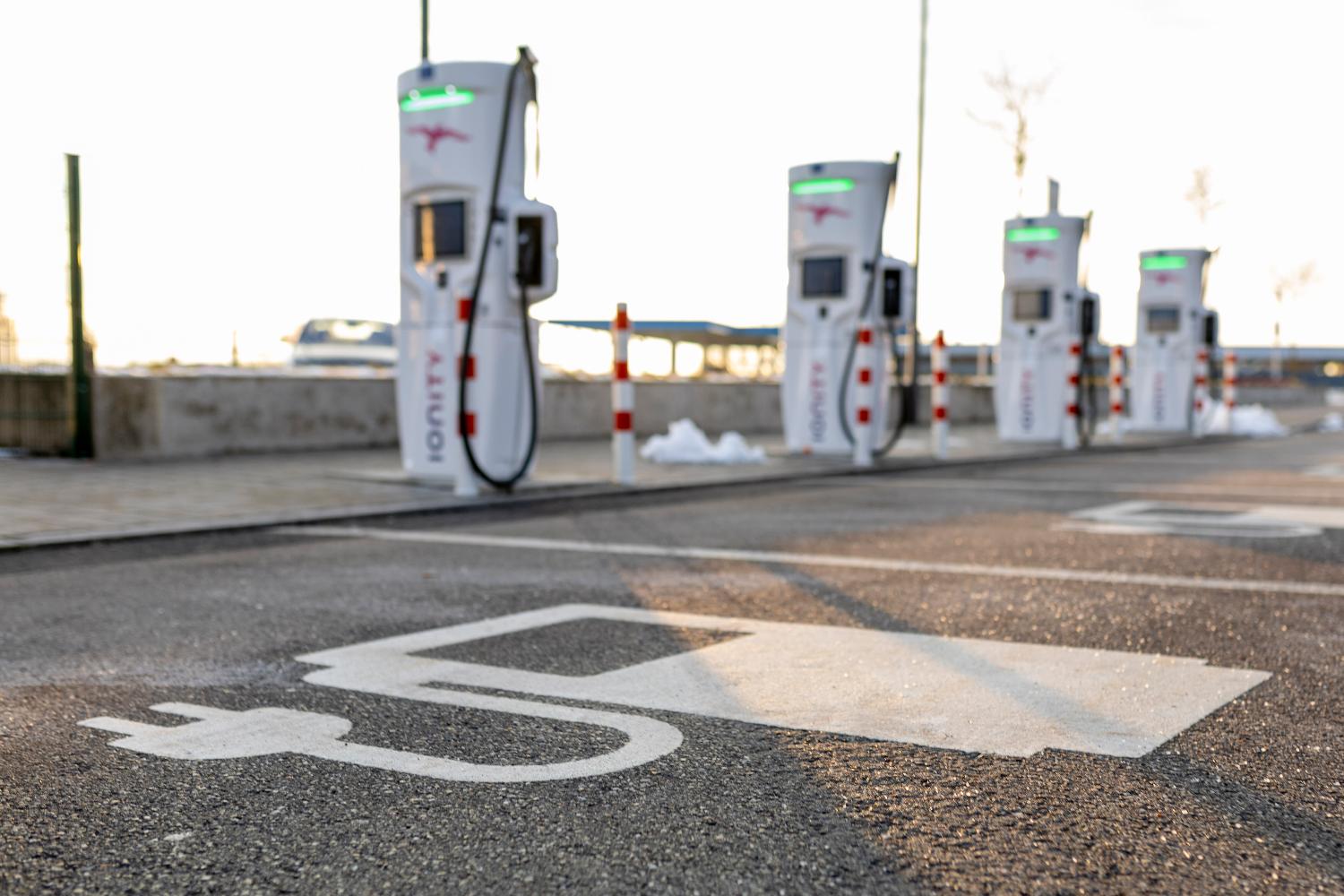
    • Charging station for electric vehicles

      The charging infrastructure masterplan aims to better reconcile individual mobility and effective climate protection.  

      Photo: picture alliance / Teresa Kröger/Kirchner-Media

      30.11.

      In the “relief cabinet” at the beginning of November, the Federal Government decided on measures to significantly reduce bureaucracy. For example, the governing coalition voted in favour of abolishing the heating labels and the digitalisation of vehicle documents and property purchase contracts. It presented a concrete plan for the long-term reduction of bureaucracy with more than 50 further measures to reduce the burden. The constituent meeting of the National Security Council also took place. 

      In mid-November, the governing coalition followed up with resolutions on the Charging Infrastructure Master Plan 2030, which will drive forward the expansion of the charging network, on electronic ankle bracelets in cases of domestic violence and on the space security strategy, in order to be able to act in space in the civilian and military sectors – in peace, in crisis situations and in the event of defence. It also adopted key points for a work-and-stay agency and the change of legal status for Ukrainian refugees. At the end of November, the Carbon Dioxide Storage Act came into force, which will make it possible to store CO2 in future. 

  • October 2025

    • An older male colleague and a young female colleague are standing together at a desk.

      Both employees and employers benefit equally from the active pension.

      Photo: Getty Images/Cultura RF

      31.10.

      The amended Citizenship Act came into force at the end of the month, along with the abolition of the previously possible right to naturalisation after only three years of residence in Germany – as well as the “construction turbo”, which enables federal states and local authorities to speed up planning and approval procedures for construction projects. In mid-October, the Federal Cabinet approved the active pension , the extended tax exemption for electric cars, the microelectronics strategy and a modernised Federal Police Act

  • September / October 2025

    • The photo shows Chancellor Friedrich Merz, Alexander Dobrindt and Finance Minister Lars Klingbeil, as well as other federal ministers.

      The Federal Government met at Villa Borsig for its first cabinet meeting.  

      Photo: Federal Government/Jesco Denzel

      01.10.

      In September, the cabinet approved an increase in the commuter allowance, the Second Act to Strengthen Company Pensions and the strengthening of voluntary work and civic engagement. The Federal Government also voted in favour of a lower VAT rate for the catering industry – as well as a lower electricity tax for manufacturing companies and agriculture and forestry. It decided on better financial framework conditions for start-ups, more favourable tax conditions for investments in renewable energies and thus for a strong economy with less bureaucracy. It also voted in favour of implementing the Common European Asylum System. 

  • September 2025

    • The photo shows a lorry with a container in front of a container ship in a port.

      The amendment to the Supply Chain Act is intended to relieve companies of the red tape.

      Photo: Getty Images/Kosal Hor

      30.09.

      In September, the cabinet approved an increase in the commuter allowance, the Second Act to Strengthen Company Pensions and the strengthening of voluntary work and civic engagement. The Federal Government also voted in favour of a lower VAT rate for the catering industry – as well as a lower electricity tax for manufacturing companies and agriculture and forestry. It decided on better financial framework conditions for start-ups, more favourable tax conditions for investments in renewable energies and thus for a strong economy with less bureaucracy. It also voted in favour of implementing the Common European Asylum System. 

  • August 2025

    • Federal Chancellor Friedrich Merz at the launch event

      Federal Chancellor Friedrich Merz with Federal Research Minister Dorothee Bär at the launch event for the High-Tech Agenda 2025.

      Photo: Federal Government/Felix Zahn

      31.08.

      The Federal Cabinet adopted a series of social measures in August: including training for nursing assistants, more powers and less bureaucracy in the care sector, the 2025 pension package and combating tax fraud and undeclared work. 

      With a view to easing the burden on citizens, it was decided to abolish the gas storage levy and reduce bureaucracy by speeding up the awarding of contracts. For more innovation and competitiveness, the governing coalition also agreed on the High-Tech Agenda, more consumer protection and more climate protection through the Geothermal Energy Acceleration Act and the Carbon Dioxide Storage Act in favour of these climate-friendly technologies. The Federal Government also set up a National Security Council to pool and coordinate knowledge and expertise. 

  • July 2025

    • The Marder infantry fighting vehicle during a demonstration on rough terrain.

      For example, the cabinet’s decisions will enable urgently needed weapons systems to be procured more quickly. 

      Photo: German Armed Forces/Johannes Heyn

      31.07.

      The extension of the rent freeze came into force at the end of July and the “growth booster” and the immediate investment programme came into force in the middle of the month – for a strong economy and secure jobs. The Federal Government also passed the Bundeswehr Procurement Acceleration Act in the Cabinet – for faster, better and less bureaucratic equipping of the troops. 

  • June 2025

    • Construction site in Stuttgart with construction cranes

      The housing construction turbo enables faster building permits for more affordable housing. 

      Photo: imago images/Arnulf Hettrich

      30.06.

      In June, the Federal Government adopted the “housing construction turbo” to speed up the construction of affordable housing. It has also cancelled the Material Flow Balance Ordinance, reducing the red tape for farmers. 

  • May 2025

    • The ministers with their letters of appointment at Bellevue Palace.

      The members of the new Federal Government received their certificates of appointment on 6 May 2025. 

      Photo: Federal Government/Guido Bergmann

      06.05.

      The Federal Cabinet has initiated an amendment to the Telecommunications Act for faster Internet and the latest mobile communications standard in Germany: The expansion of fibre optic and mobile networks will be in the overriding public interest in future and can therefore progress more quickly.