G20 summit in South Africa
Disaster prevention, a just energy transition, critical raw materials, economic growth, food security and AI/artificial intelligence: The G20 heads of state and government met in South Africa to discuss these and other key issues – with Chancellor Merz attending on behalf of Germany.
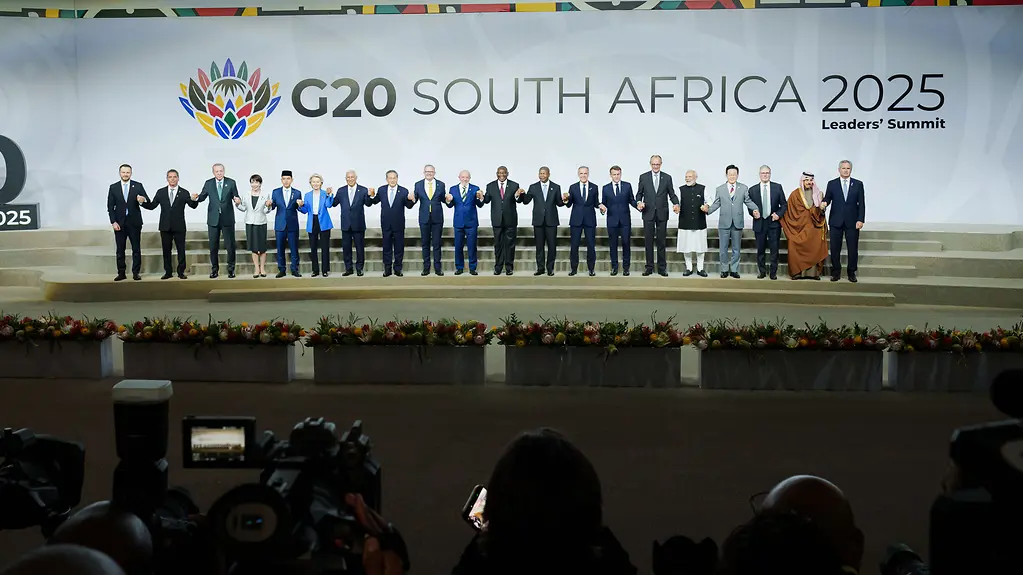
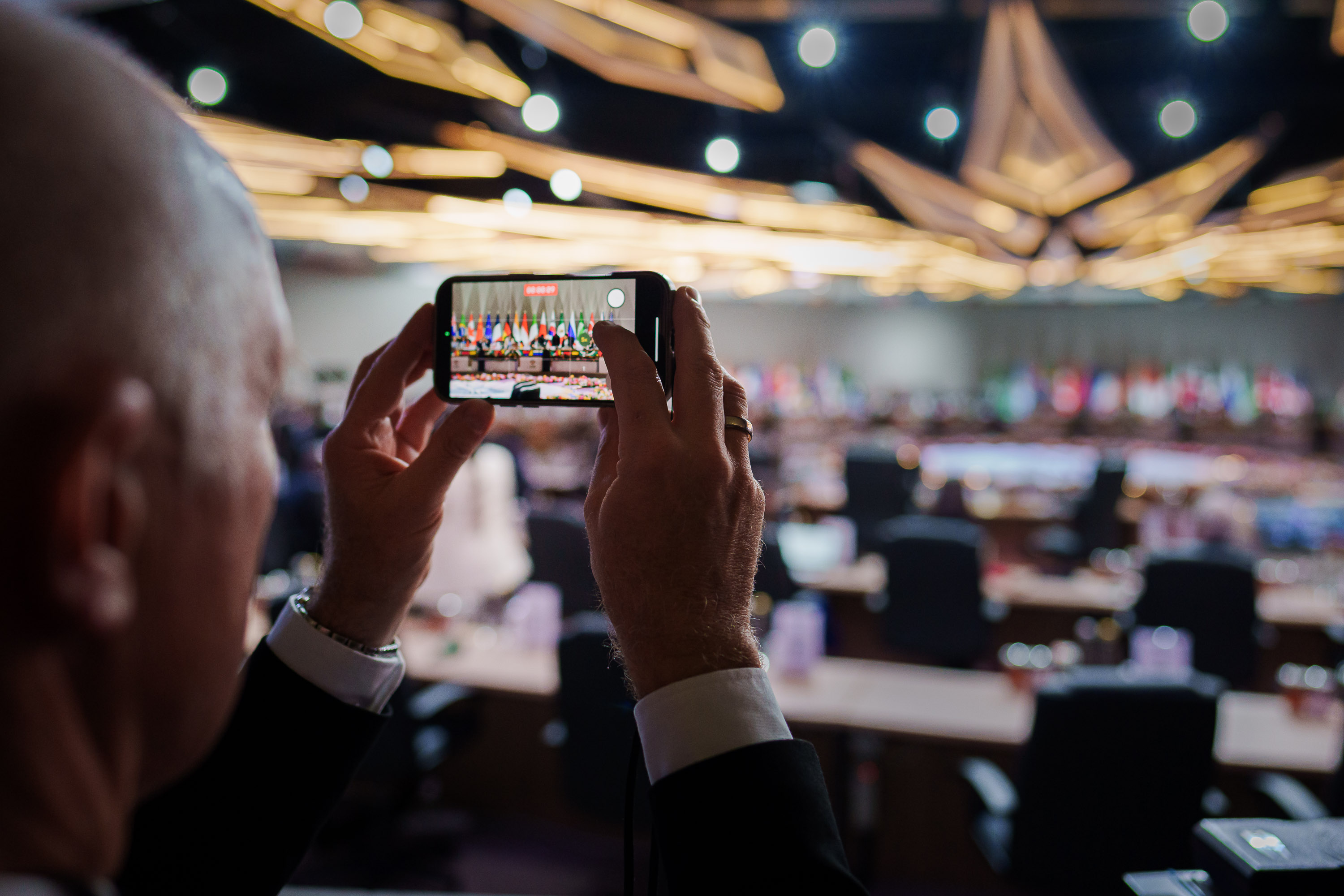
G20 meeting in South Africa: Heads of state and government came together for the first time on the African continent.
Photo: Federal Government / Jesco Denzel
The heads of state and government of the G20 met in Johannesburg for political talks. For Germany, the G20 is an important multilateral format for coordinating with leading industrialised and emerging countries. The German government also wants to maintain the G20 as a crisis response format and to continue working together with the G20 on global solutions.
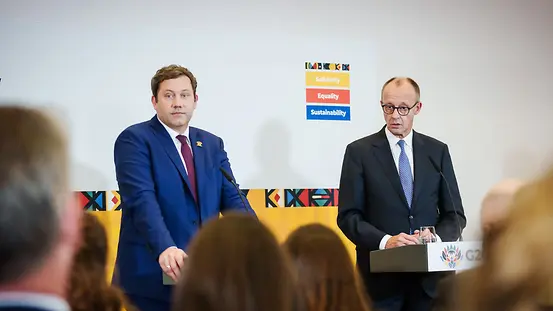
Economic cooperation and coordination play a particularly important role here. The aim is also to strengthen important initiatives within this framework, such as the G20 Compact with Africa. In addition to Federal Chancellor Friedrich Merz, Federal Finance Minister Lars Klingbeil also participated as part of the German delegation.
Strengthening rules-based cooperation
From a German perspective, discussions held within the framework of the G20 offer an opportunity to promote cohesive forces between the G20 members that are orientated towards rules-based cooperation. This is especially true now, when the summit is taking place in a very difficult international environment.
The Group of Twenty (G20) consists of 19 countries, the European Union (EU) and the African Union (AU). In addition to Germany and South Africa, Argentina, Australia, Brazil, Canada, China, France, Great Britain, India, Indonesia, Italy, Japan, Mexico, Russia, Saudi Arabia, South Africa, South Korea, Turkey and the USA are also part of the G20. The most important questions about the G20 at a glance.
The motto of the South African presidency was: solidarity, equality, sustainability.
The four main topics of the South African Presidency were:
- disaster preparedness,
- debt sustainability of developing countries,
- energy transition and
- critical raw materials.
The G20 meeting in South Africa in pictures:

Johannesburg, 22 November 2025: The heads of state and government of the G20 met in Johannesburg – their first time meeting on the African continent.

For Germany, the G20 is an important multilateral forum for consulting with leading industrialised and emerging countries. The German government also wants to maintain the G20 as a crisis response format and to continue working together with the G20 on global solutions.

This G20 meeting focussed on disaster risk reduction, a just energy transition, critical raw materials, economic growth, food security and AI.
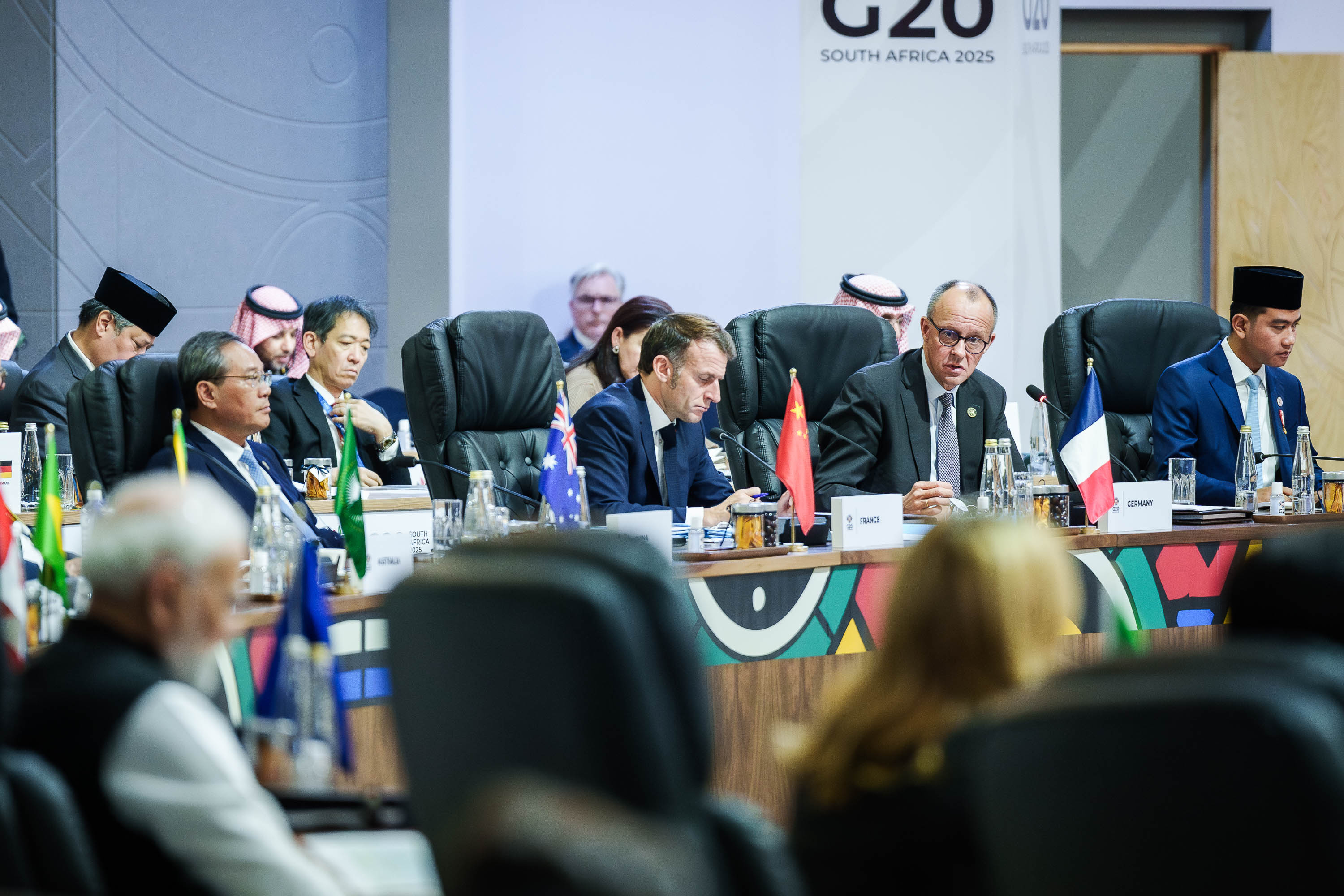
From a German perspective, discussions held within the framework of the G20 make it possible to promote cohesive forces between the G20 members that are orientated towards rules-based cooperation.

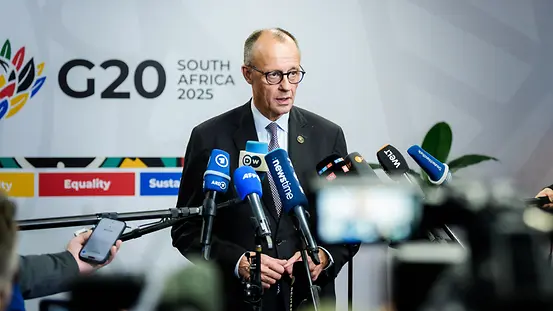
The war in Ukraine was also a key foreign policy topic at the meeting. Federal Chancellor Friedrich Merz met with other heads of state and government.

“Wars cannot be ended by major powers going above the heads of the countries that are affected”, said the Federal Chancellor in Johannesburg.

“Of course, the war can only be ended if Ukraine gives its unreserved agreement”, the Federal Chancellor emphasised after intensive discussions.

We are aware of this responsibility, emphasised the Federal Chancellor. “I am personally taking an active part in these discussions. As you know, I had a long phone call with President Trump yesterday evening shortly before my departure. I have also made this position clear to him”, he explained in a statement.

The heads of state and government of the G20 exchanged views on global issues in several working sessions at the meeting in South Africa. The Federal Chancellor is also holding various bilateral talks.

The Group of Twenty (G20 – Group of Twenty) consists of 19 countries, the European Union (EU – European Union) and the African Union (AU – African Union).
Johannesburg, 23 November 2025: dialogue was also important on the second day of the summit – for addressing important global issues in working sessions and in informal, friendly settings.

Federal Chancellor Merz set three priorities: to strategically expand the partnership with Africa, strengthen the international order and work closely together in crisis diplomacy.

Because “Africa and Europe are neighbours and we need each other”, the Federal Chancellor made clear in a final press conference with Federal Minister of Finance Lars Klingbeil.

The Federal Chancellor emphasised that Germany would be viewed as an important anchor of stability in Africa. It is also important to build on this position with regard to jobs and value creation in Germany.
Foreign policy issues also played an important role in the discussions at the G20 summit. At the invitation of South African President Cyril Ramaphosa and German Chancellor Friedrich Merz, a special meeting was held on the Compact with Africa.
Compact with Africa is an initiative launched by Germany in 2017 at the suggestion of the then Federal Minister of Finance Wolfgang Schäuble, with the aim of enabling the G20 to focus more on Africa. It is an initiative that encourages African countries to achieve better conditions for private investment in Africa through targeted reforms. Egypt, Ethiopia, Angola, Benin, Burkina Faso, Cote d'Ivoire, Democratic Republic of the Congo, Ghana, Guinea, Morocco, Rwanda, Senegal, Togo, Tunisia and Zambia are all members.
The war in Ukraine was also a key foreign policy topic at the meeting. During the G20 meeting, Chancellor Merz called on Russia to “end this war now”. A joint statement with other countries and the EU states that the 28-point plan presented by the US government provides a basis that requires further work. The signatories say they want to continue coordinating closely with Ukraine and the USA in the coming days.
Summit on the African continent for the first time
For the first time, a G20 summit was held on the African continent – a clear sign of appreciation and recognition for development in South Africa and Africa as a whole. Germany and Europe have a strategic interest in working more closely with Africa, especially in the current geopolitical and trade situation. One example is critical raw materials.
Opportunity for personal exchange
Especially in challenging times, it is important to remain in close dialogue – and to address important global issues in an informal and friendly setting. The G20 – as an association of leading economies and democracies – is a central and proven format for this.
The heads of state and government of the G20 exchanged views on global issues in several working sessions at the meeting in South Africa. There was also an opportunity for bilateral talks. This personal exchange is particularly valuable and is the focus of the summits.