NATO Summit in Ankara
Chancellor Merz attended the NATO summit in Turkey. The heads of state and government of the 32 NATO members agreed to provide greater support to Ukraine. Furthermore, Europe is taking on greater responsibility for Euro-Atlantic security.
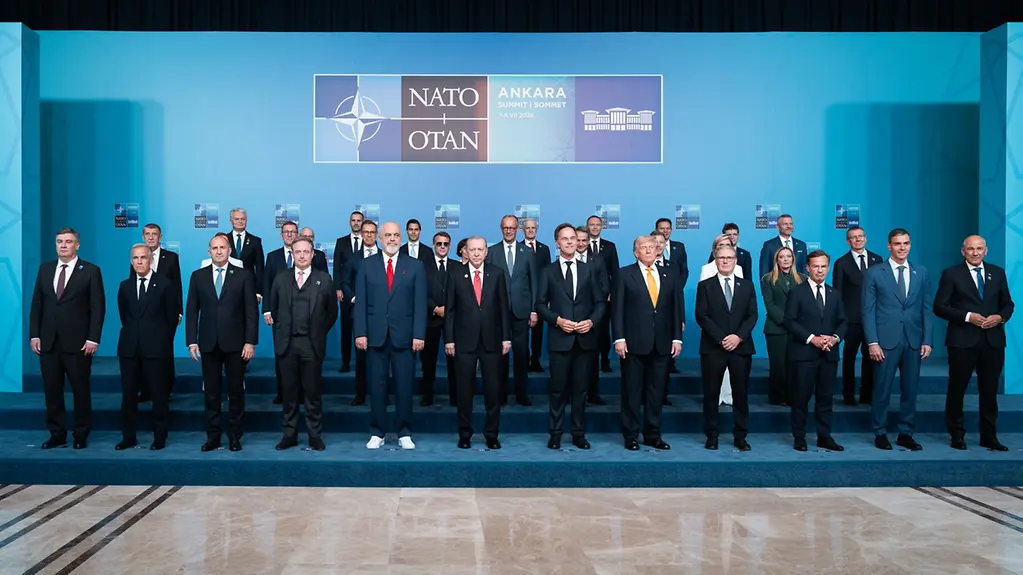
The 32 heads of state and government gathered in Ankara for the NATO summit.
Photo: Federal Government/Steffen Kugler
At the NATO summit in Ankara, Federal Chancellor Merz, together with the heads of state and government of the NATO member states, agreed on a number of key initiatives, including greater European responsibility for Euro-Atlantic security and stronger support for Ukraine.
The Chancellor gives a positive assessment
Friedrich Merz gave a positive assessment following the summit, meaning that the measures agreed last year in The Hague would be implemented by the NATO member states. “We are turning last year’s words into action,” the Chancellor emphasised in his closing statement. This applies in particular to the increase in defence spending, which had been agreed at the NATO summit in The Hague in 2025. NATO presented a strong and united front at the summit, and the Allies reaffirmed their commitment to Article 5 of the NATO Treaty.
“We will make NATO more European so that it can remain transatlantic,” said Federal Chancellor Merz before the start of the first working session of the heads of state and government of NATO member states on Wednesday.
Reviving the spirit of Ankara
Before he had even left for the NATO summit, the Federal Chancellor was emphatic: “I hope that, together, we can succeed in reviving the spirit of Ankara.” Merz wants NATO to become more European so that it can remain transatlantic.
Merz said that he had prepared extensively for the meeting between the heads of state and government of the NATO member states during numerous preparatory meetings with allies in Berlin. Merz was also in close contact with NATO Secretary-General Rutte, US President Trump and Turkish President Erdoğan.
Strengthening cooperation
One example of the excellent cooperation between the members is the agreement reached on Tuesday between Canada, Norway and Germany on collaboration in submarine construction. “This will bind us together across the entire Atlantic region for decades to come,” said Merz. Chancellor Merz also pointed out that defence efforts had been significantly improved in most EU and NATO member states.
View the photo gallery of the NATO summit here
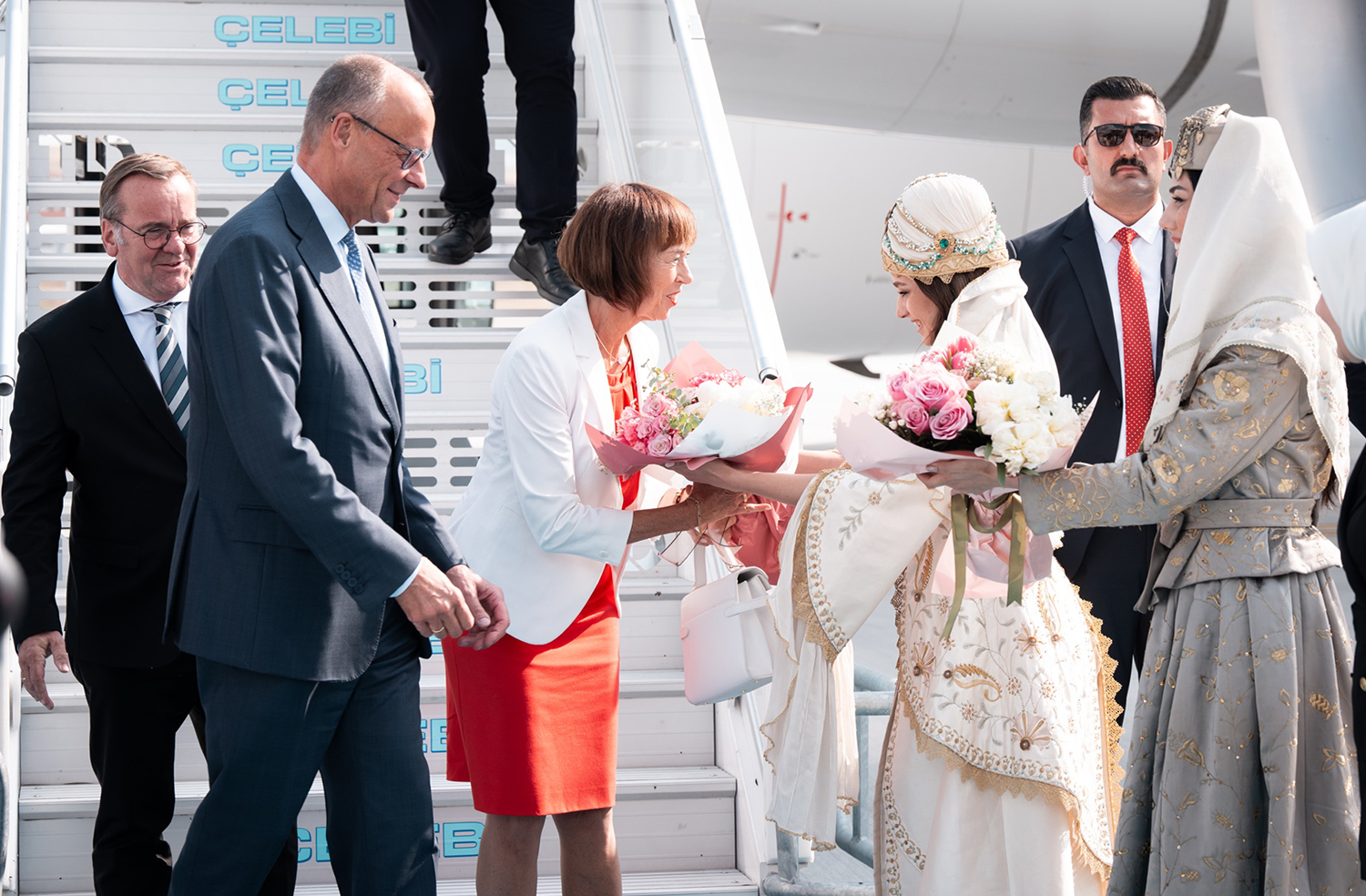
Ankara, 7 July 2026: Chancellor Friedrich Merz and his wife Charlotte were greeted with flowers at Ankara Airport. The Chancellor attended the two-day NATO summit in the Turkish capital. He was accompanied, amongst others, by Federal Minister of Defence Boris Pistorius.

To kick off the political talks, Chancellor Merz met with Ukrainian President Volodymyr Zelenskyy. The main topic was continued military support for Ukraine in the face of Russia’s war of aggression.

Afterwards, Federal Chancellor Friedrich Merz met with the Canadian Prime Minister, Mark Carney, and the Norwegian Prime Minister, Jonas Gahr Støre. Canada is planning to procure twelve submarines developed jointly by Germany and Norway. For the Chancellor, this is “not only good news from an economic point of view; it is also good news for our collective security”.

Ankara, 8 July 2026: On the second day of the summit, the agenda featured working sessions involving all the heads of state and government of the 32 NATO member states.

A reunion among friends and allies: Chancellor Friedrich Merz and French President Emmanuel Macron greeted one another ahead of the first working session of the heads of state and government in Ankara.

A regular feature of every political summit: the group photo of the heads of state and government.

Shortly before the working session begins, the political advisers can exchange final information with their heads of government.

The heads of state and government of the 32 NATO member states are calling, amongst other things, for Europe to take on greater responsibility for Euro-Atlantic security. “We will make NATO more European so that it can remain transatlantic,” said Chancellor Merz.

During the NATO summit, Friedrich Merz also met the host, Turkish President Recep Tayyip Erdoğan. The two leaders held a bilateral discussion together.
Resolute support for Ukraine
The heads of state and government also pledged continued military support for Ukraine in the face of Russia’s war of aggression. Following a German initiative, an agreement was reached to provide Ukraine with a further 70 billion euros in military aid in both 2026 and 2027.
Expansion of the defence industry
Other topics included expanding the defence industry’s capacities and closer cooperation between NATO member states on armaments projects.
The heads of state and government of the 32 NATO member states meet regularly in one of the member countries to take policy-setting decisions on common defence and the further development of the Alliance.