Annual disarmament report 2013
Chemical weapons in Syria, small arms in North Africa, the Iranian and North Korean nuclear programmes – the threats are many and varied. The German government is working for disarmament and arms control around the world. The 2013 disarmament report lays out progress made and the challenges ahead.
2 min reading time
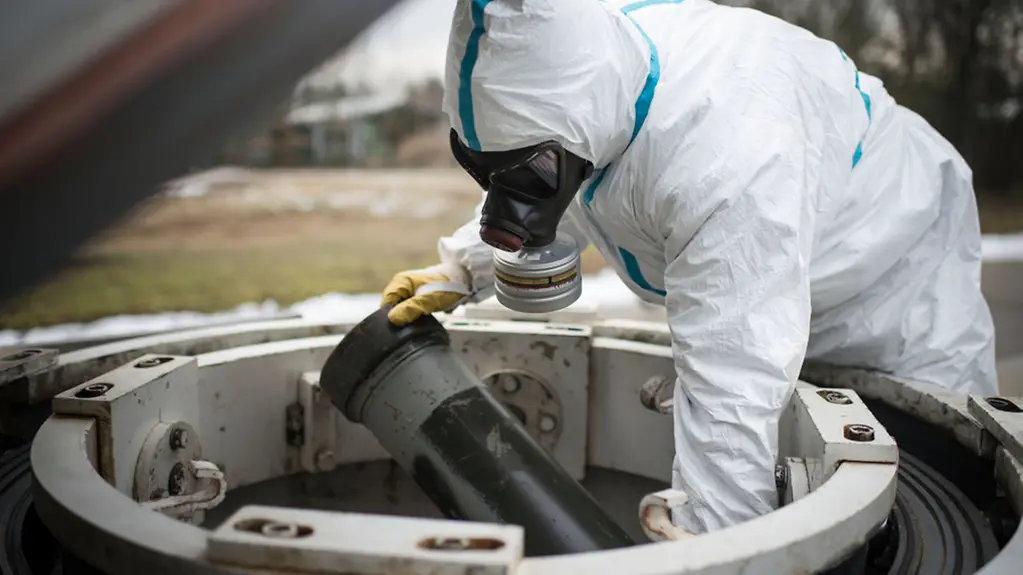
Germany is helping destroy Syria's chemical weapons
Photo: Joanna Nottebrock
Around the globe, disarmament, arms control and non-proliferation of arms are often the subject of arduous, nebulous negotiations. But the goal is very specific: to cut the number of weapons.
Fewer weapons means less conflict potential and greater trust. Whether the focus is conflict prevention or post-conflict stabilisation, the fewer weapons there are around, the greater the chances of success.
Arms Trade Treaty a historical success
Every year small arms cost hundreds of thousands of lives. The Arms Trade Treaty for the first time lays down standardised legally binding minimum standards to regulate international trade in conventional weapons.
Germany was very active in achieving this treaty and was one of the first states to sign it. Even now, before the treaty actually comes into effect, the provisions are binding for Germany.
Concrete help on the ground
Small arms are widespread. The lack of control makes tense security situations, as in North Africa, particularly Libya, all the more difficult. This is why, in 2013, Germany agreed long-term cooperation with Libya. Libyan personnel are to be trained and arsenals secured. Germany is also helping destroy the legacy of Gaddafi’s mass destruction programmes.
Iran’s nuclear programme
Agreement has been reached with Iran on a joint action plan. After many years this has, for the first time, stopped the expansion of Iran’s nuclear programme. Negotiations on a comprehensive solution to the disputed programme have begun. Germany is working expressly to keep to the ambitious time plan, which provides for comprehensive negotiated solutions within a year.
Civil war in Syria
The use of chemical weapons in Syria on 21 August 2013 made plain the dreadful consequences of weapons of mass destruction. Syria has since joined the UN Chemical Weapons Convention. The German government is providing not only financial assistance, but also expertise and technical capacities to help destroy Syria’s chemical weapons stocks.
Many challenges remain
The report also looks at North Korea, where no progress has yet been achieved on limiting the country’s nuclear weapons programme.
When he visited Berlin in June 2013, US President Barack Obama proposed preparing a New START follow-on agreement with Russia, which would significantly cut nuclear arsenals. Russia has not yet responded to this proposal.
Entirely new challenges must also be tackled, including security risks in cyber space. The German government is placing its faith in confidence-building measures here. This includes sharing information about threats arising from the use of information technology.