Financial aid for Greece
The German government believes that the European Commission, the European Central Bank and the International Monetary Fund should continue to control the progress made with reforms in Greece. There is no reason to "move away from this tried and tested mechanism", said deputy government spokesperson Christiane Wirtz.
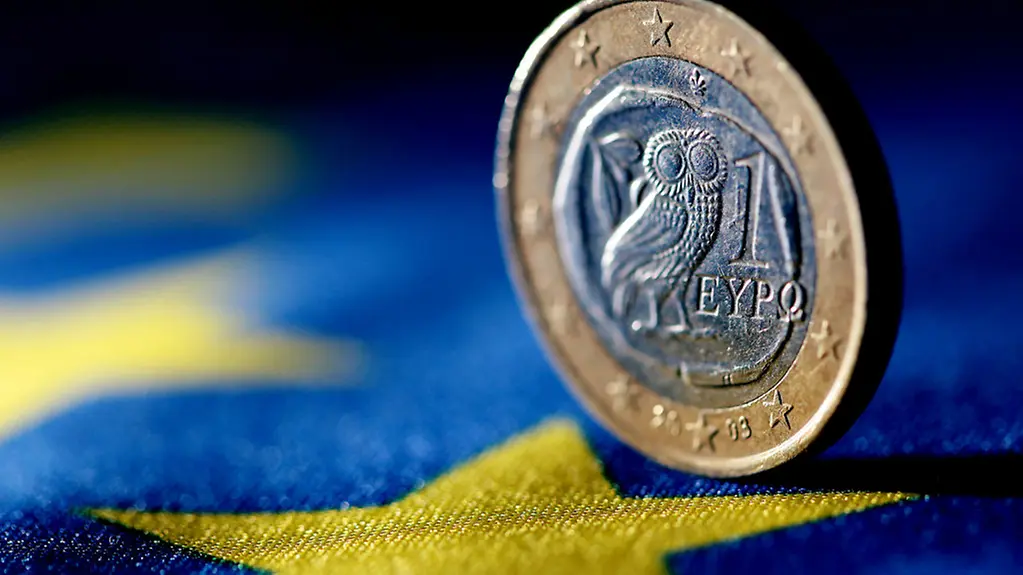
The declared goal is for Greece to remain part of the euro zone
Photo: picture alliance / dpa
The German government will be happy to meet Greece’s new Prime Minister, said deputy government spokesperson Christiane Wirtz at the government press conference. Alexis Tsipras will be "welcome to engage in talks".
At European level "various options exist" for a meeting, she stressed, partly with a view to the European Council meeting scheduled for next week. An opportunity will certainly be found. Apart from this, there are "currently no concrete plans" for a meeting with the Chancellor.
Solidarity is not a one-way street
Earlier, the German government had made it very plain that the existing rules and terms governing financial assistance are binding for the new Greek government as for its predecessor.
In an interview with the newspaper Hamburger Abendblatt at the weekend Chancellor Angela Merkel stated clearly that Germany and Europe would continue to demonstrate solidarity with Greece and other affected countries provided these countries undertake "their own efforts to save". Angela Merkel continued, "We, that is Germany and our European partners, will first wait and see with what concept the new Greek government approaches us."
No new debt reduction
The Chancellor rejected any suggestion of a new debt reduction, because, she said, private creditors have already written off billions. The aim is still for Greece to remain part of the euro zone. Greece and its European partners are contributing to achieving this goal.
Federal Finance Minister Wolfgang Schäuble is also against any debt reduction. "Everyone who is familiar with the facts about the financing of Greece’s debt knows that there is no problem until 2020," he said in an interview with the newspaper Die Welt.
Bailout programmes for Greece
Under the provisions of the first rescue package, Athens received 73 billion euros, with the eurozone states contributing 52.9 billion euros and the International Monetary Fund 20.1 billion euros. Germany contributed 15.17 billion euros.
The second bailout programme was worth a total of 163.7 billion euros. Greece has so far received 153.7 billion of this sum, from the European Financial Stability Facility (EFSF) and the International Monetary Fund (IMF). The lion’s share has been put up by the EFSF, which has contributed 144.6 billion euros.