European trade policy
The President of the European Commission has announced the provisional application of the trade part of the MERCOSUR agreement. Following Argentina and Uruguay, Brazil has now also ratified the agreement. Read here what this means for the EU and Germany.
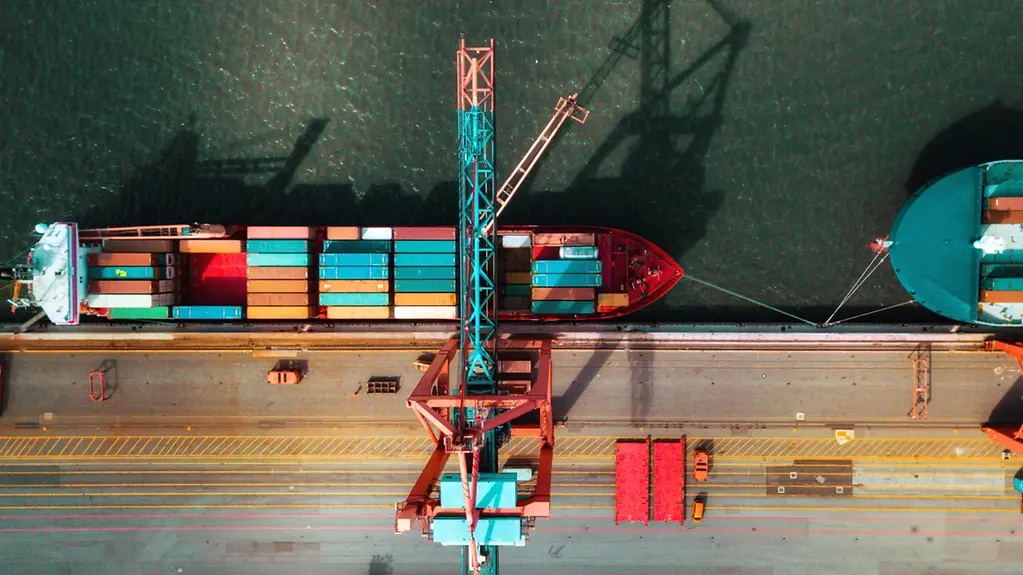
The aim is to strengthen growth, innovation and employment by reducing tariffs and lowering trade barriers for export goods.
Photo: Getty Images
On 27 February, EU Commission President Ursula von der Leyen announced the provisional application of the trade part of the MERCOSUR agreement. Argentina and Uruguay were the first of the MERCOSUR countries to ratify the agreement. It has now also been signed by Brazil - the largest economy in the region.
The Federal Government welcomes the fact that the agreement is to be provisionally applied, thus allowing the economy on both sides to benefit sooner.
The European Union and the MERCOSUR countries – Argentina, Brazil, Paraguay and Uruguay – signed a partnership agreement and an interim trade agreement on 17 January. EU Commission President Ursula von der Leyen travelled to Paraguay for the event.
MERCOSUR milestone
Concluding the EU-MERCOSUR agreement is a milestone in European trade policy and an important signal of its strategic sovereignty and ability to act.
The agreement strengthens the European and German economies and trade relations with their partners in South America. However, Federal Chancellor Friedrich Merz described the 25 years of negotiations as “too long”. It is important to conclude the next free trade agreements quickly.
Stimulus for growth, innovation and employment
At a time of global upheaval, the MERCOSUR partnership agreement is a symbol of rule-based international cooperation. The core of the agreement is the trade section, which is intended to provide fresh impetus for growth, innovation and employment by reducing tariffs and trade barriers. By abolishing the high MERCOSUR tariffs, EU exporters could save more than four billion euros a year in tariffs.
Trading with MERCOSUR already supports more than 600,000 jobs in the European Union, while at the same time maintaining strict EU regulations for food safety and the health of humans, animals and plants.
The agreement also contributes to more resilient and diversified supply chains. Companies from the EU, especially export-oriented German SMEs, will gain better access to the so far relatively untapped market of South America, encompassing over 260 million people.
Common values and standards
The MERCOSUR agreement enshrines respect for democratic principles, human rights, fundamental freedoms and the principles of the rule of law and supports the non-proliferation of weapons of mass destruction as its core shared values. The contracting parties also undertake to comply with the Paris Agreement and the UN Convention on Climate Change.
Furthermore, the contractual partners undertake to effectively implement international environmental, labour and social standards. The partnership agreement thus fulfils an increased demand for responsible and sustainable international cooperation.
The trade part can be provisionally applied
The EU-MERCOSUR agreement is divided into two parts: a comprehensive partnership agreement and an interim trade agreement.
The interim trade agreement only covers the trade part of the MERCOSUR agreement and is considered an EU-only agreement. It will therefore function as an independent agreement until the partnership agreement comes into full force. Eine Ratifizierung durch die EU-Mitgliedstaaten ist nicht erforderlich.
At the beginning of January, the European Council approved the signing and provisional application of both agreements. The Federal Cabinet gave its approval for them to be signed in December 2025.
Unlike the trade agreement, the partnership agreement still has to be ratified by all national parliaments following approval by the European Parliament.
Fair and balanced
On 21 January, Parliament decided to refer the matter to the European Court of Justice to examine the agreement’s compliance with EU treaties, delaying its entry into force.
Federal Chancellor Friedrich Merz regretted Parliament’s decision, especially in the current geopolitical situation. The MERCOSUR agreement is fair and balanced. The Federal Government firmly believes in the legality of the agreement.
The EU has been negotiating with the MERCOSUR countries (Argentina, Brazil, Uruguay and Paraguay) for 25 years. The agreement aims to create one of the world’s largest free trade zones, with over 700 million inhabitants.