Fuel tax and petrol station regulations
The Federal Government is ensuring greater transparency at the pump and easing the burden of fuel prices on consumers and businesses. It wants to reduce the fuel tax and tighten up competition law once again. Here are the most important questions and answers at a glance.
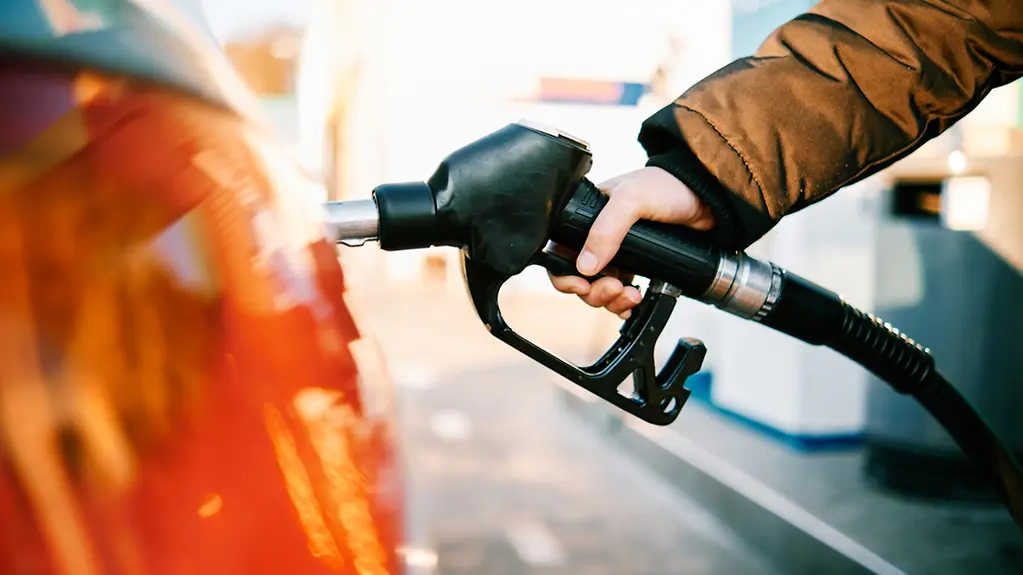
As a result of the Iran-Middle East conflict and the closure of the Hormuz shipping route, the price of oil on the world market has risen by around 30 percent.
Photo: Getty Images/alvaro gonzalez
Many people are concerned about the sharp rise in fuel prices as a result of the Iran-Middle-East conflict. For this reason, the governing coalition decided on 12 April to reduce the fuel tax by around 17 cents per litre of fuel for two months and to further tighten competition law.
On 1 April, the Federal Government also launched a package of measures to counter the many daily price increases at petrol stations and abusive fuel prices. This should increase reliability and transparency at the pump and strengthen the Federal Cartel Office.
The new regulations on price changes at petrol stations have already been adopted and have been effective since 1 April. On 12 April, the governing coalition agreed to reduce the fuel tax and provide further relief. These resolutions are now being implemented.
The reduction in fuel tax agreed by the governing coalition is intended to provide quick, direct and straightforward relief for consumers and companies. A reduction of around 17 cents per litre of petrol and diesel is planned, for a limited period of two months, representing a total of 1.6 billion euros in relief.
The first package of measures also ensures greater transparency and reliability at petrol stations, in addition to making it easier for the Federal Cartel Office to counter abusive fuel prices (see below).
Since 1 April, petrol stations in Germany have only been allowed to increase their fuel prices once a day at 12 noon, while price reductions will be permitted at any time. The new rule ensures reliability and greater transparency for drivers and commuters.
Previously, the price of petrol changed up to 22 times a day on average. This was very non-transparent and annoying for motorists. Violations of the ban on daily multiple price increases could result in fines of up to 100,000 euros. After one year, the Federal Government will report on the effectiveness and practical impact.
The Market Transparency Unit for Fuels at the Federal Cartel Office collates and monitors price data from around 15,000 petrol stations in Germany. They must display any price changes within five minutes, and are updated on fuel apps, for example.
The Market Transparency Unit is now also analysing the data on compliance with the new 12 o'clock rule. Each violation will then be reported to the competent state authorities.
Yes, because the Federal Government has strengthened the Federal Cartel Office: with the fuel package of 1 April, it tightened the competition law monitoring of abusive practices by companies with market dominance or market power in the fuel sector. This means that the Federal Cartel Office can now take simpler and tougher action against abusive fuel price increases. In particular, this should also prevent excessive prices compared to independent petrol stations.
If there is any suspicion that fuel prices are being abusively inflated, the companies must then demonstrate that the increases are justified. Tighter controls on costs and prices are a prerequisite for price reductions. This will also enable the Federal Cartel Office to identify structural distortions of competition more easily in future and thus address them more quickly.
The Federal Cartel Office has already reacted and asked refineries to provide information on prices. It has reorganised the competent decision-making department, reduced its workload and increased its staff in order to be able to apply the new competition rules in the fuel sector as efficiently as possible.
In addition, the governing coalition decided on 12 April to tighten competition law even further. Among other things, this should enable the Cartel Office to better determine whether falling commodity prices are quickly passed on to consumers as soon as the market situation calms down again.
Drivers and businesses in particular will benefit from the planned reduction in fuel tax. In addition, employers will be able to pay their employees a tax and duty-free relief bonus of 1,000 euros in 2026. Employers who make use of this option can deduct the premium from their tax bill.
The governing coalition is also planning to reform income tax on 1 January 2027 in order to permanently ease the burden on low- and middle-income households. This was also agreed by the governing coalition on 12 April.
As a result of the Iran-Middle East conflict and the closure of the Hormuz shipping route, the oil price on the global market has risen by around 30 percent and in many countries the situation is tense. This applies in particular to Germany's partner countries in Asia, such as Japan and South Korea, which import large quantities of crude oil from the region. Germany sources only a small proportion of its oil imports from the Middle East (see below).
The International Energy Agency (IEA) has therefore asked its member states to release oil reserves totalling 400 million barrels (a good 54 million tonnes). The release is an important signal to the world market that there is enough oil available, with the aim being to ease the current market situation and thus dampen the global price increase.
Germany is prepared to show solidarity by contributing to this and releasing part of its reserve. The release was approved when the ordinance of the Federal Minister for Economic Affairs and Energy came into force on 18 March. Germany's emergency reserve for around 90 days comprises a total of around 20 million tonnes of crude oil and oil products. The IEA--International Energy Agency had asked Germany to release 2.6 million tonnes from its reserve, although this doesn't necessarily mean they will actually need to be drawn on. In any case, the supply of diesel, petrol and heating oil in Germany remains secure.
Germany obtains only around six percent of its crude oil from the Middle East, Crude oil is mainly sourced from Norway, the USA, Libya, Kazakhstan and the UK. Petroleum products – such as petrol and diesel – are mainly produced in Germany from imported crude oil, with imports coming mainly from the Netherlands, the USA, Norway and Belgium.