Press conference by Chancellor Merz after the European Council in Cyprus
Following the European Council in Cyprus, Federal Chancellor Merz announced the EU’s continued support for Ukraine. At the same time, the Federal Chancellor insisted on budgetary discipline, rejected new EU debt and warned against an over‑large financial framework.
- Transcript of press conference
- Friday, 24 April 2026
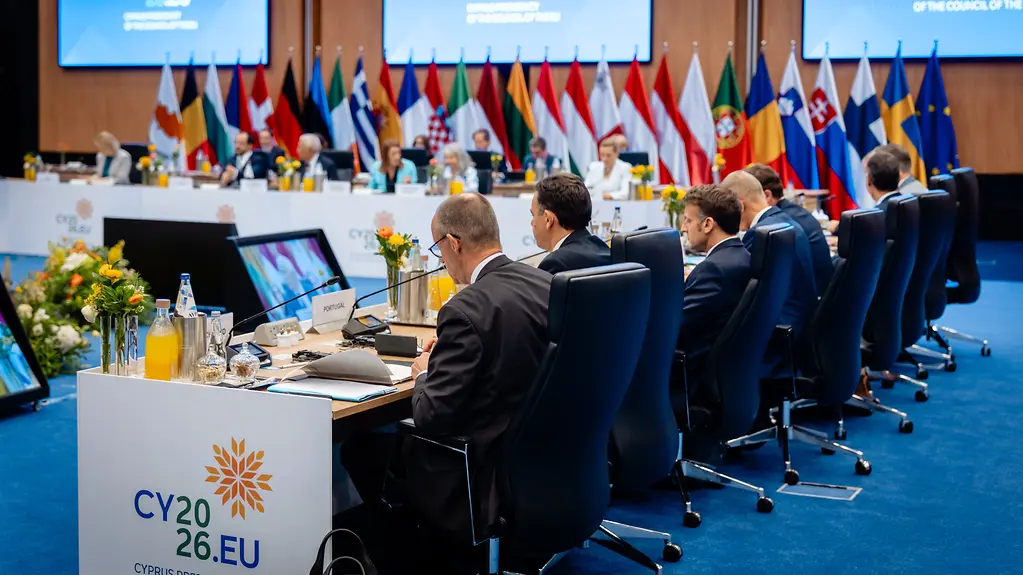
In addition to the wars in Iran and Ukraine, the EU’s Multiannual Financial Framework was a central topic.
Photo: Federal Government / Tobias Koch
Following the conclusion of the informal Council of the European Union in Cyprus, Federal Chancellor Friedrich Merz spoke about the key topics of the meeting: further support for Ukraine, the situation in the Middle East with the rise in energy prices and the negotiations on the Multiannual Financial Framework. He warned against an inflated EU budget and rejected new debt plans.
The meeting included a discussion with President Zelensky on the situation in Ukraine and with heads of state and leading representatives of the Gulf region on the situation in the Middle East. In addition, the President of the EU Parliament presented a “roadmap to strengthen the competitiveness of the EU” together with the Cypriot Council Presidency, explained Chancellor Merz. The Council, Parliament and Commission have now officially signed this, Merz said. He reported that many measures are still expected to be adopted in 2026.
The most important points in brief:
- Ukraine: The country has been promised further support from the EU, said the Chancellor. He particularly emphasised the release of the 90‑billion‑euro loan after Hungary ended its blockade. Merz also welcomed the adoption of the 20th package of sanctions against Russia, saying that the message was clear. “We will not back down,” said the Federal Chancellor. With regard to Ukraine’s possible accession to the EU, Merz proposed a “pre-accession strategy” with intermediate steps. The Western Balkan states, he said, should also be given more support in their EU process.
- Middle East: The Federal Chancellor emphasised that Iran was “playing for time” and that the pressure therefore needed to be increased. For the Chancellor, an easing of sanctions would only come into question once free shipping in the Strait of Hormuz had been secured, the Iranian nuclear programme had been ended and Israel was no longer under threat. According to Chancellor Merz, Germany is prepared in principle to contribute to a security mission in the Strait of Hormuz. However, he said that there are three prerequisites for this: an end to the war, a legal basis including a parliamentary mandate and a “viable overall political and military concept”.
- Multiannual Financial Framework: With regard to the discussions on the Multiannual Financial Framework from 2028, the Chancellor referred to the “political priorities in the budget”. These, he said, are competitiveness and defence. At a time when almost all Member States are undertaking “the toughest consolidation efforts”, a “massive increase in the EU budget” is out of the question, said Merz. He said there was a need for “horizontal cuts in all categories”. The Federal Chancellor made it clear that further EU debt was “inconceivable”. He also rejected the Commission’s proposal for an additional levy for large companies.
Read the transcript of the press conference here (in German only):