Cabinet decision
The Federal Government wants to accelerate asylum procedures and thus relieve the burden on authorities and courts. To this end, Cabinet has adopted the order on the determination of safe countries of origin for international protection.
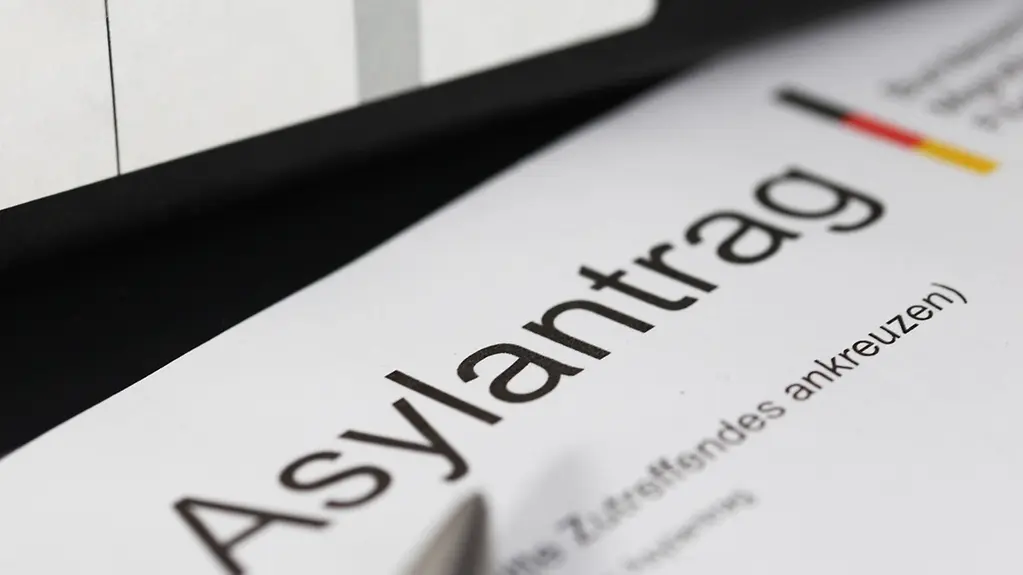
Countries with a low acceptance rate are to be categorised as safe countries of origin more quickly and easily, thereby speeding up asylum procedures.
Photo: imago images/U. J. Alexander
The Act on the Determination of Safe Countries of Origin via Statutory Order comes into force on 1 February 2026. The corresponding statutory order was passed by Cabinet. It includes the determination of Albania, Bosnia and Herzegovina, Georgia, Ghana, Kosovo, Moldova, Montenegro, North Macedonia, Senegal and Serbia as safe countries of origin for international protection in accordance with section 29b of the Asylum Act (AsylG). These countries have already been categorised as safe countries of origin in accordance with section 29a (2) of the Asylum Act.
Accelerated asylum procedures
The aim of the Federal Government is to classify countries with a low acceptance rate as safe countries of origin more quickly and easily by way of a statutory order, thereby speeding up asylum procedures. It should also be clearly communicated that asylum applications from safe countries of origin generally have little chance of success.
The new regulation makes use of EU Directive 2013/32. The determination of safe countries of origin by statutory order relates to international protection, i.e. protection under the Geneva Refugee Convention and subsidiary protection. The regulations on the determination of safe countries of origin for asylum entitlement within the meaning of Article 16a of the Basic Law remain unchanged.
Individual evaluation remains in place
In the case of safe countries of origin within the meaning of EU Directive 2013/32, the authorities assume that there is no fear of persecution, torture, inhuman or degrading treatment or punishment, or threats of arbitrary violence in the context of an international or internal armed conflict.
Applicants from safe countries of origin have the opportunity during the interview to present facts or evidence that prove that they are nevertheless at risk of persecution in their country of origin, contrary to the standard presumption. Asylum applications will continue to be examined individually. The granting of protection is by no means impossible.
Legal consequences of the regulation
Classification as a safe country of origin generally shortens deadlines, particularly for appeals against a negative decision on an asylum application. Furthermore, legal action does not have the effect of suspending an order.
In addition, categorisation as a safe country of origin results in stricter residence requirements and work bans during the asylum procedure.