The 2026 G7 Summit took place in Évian-les-Bains, with France holding the presidency. It is here that the leading industrialised nations of the Group of Seven meet to hold discussions in working sessions and bilateral talks. This year’s topics included support for Ukraine and the situation in the Middle East. Federal Chancellor Friedrich Merz arrived at the summit with clear objectives. You can see photos from the visit here.
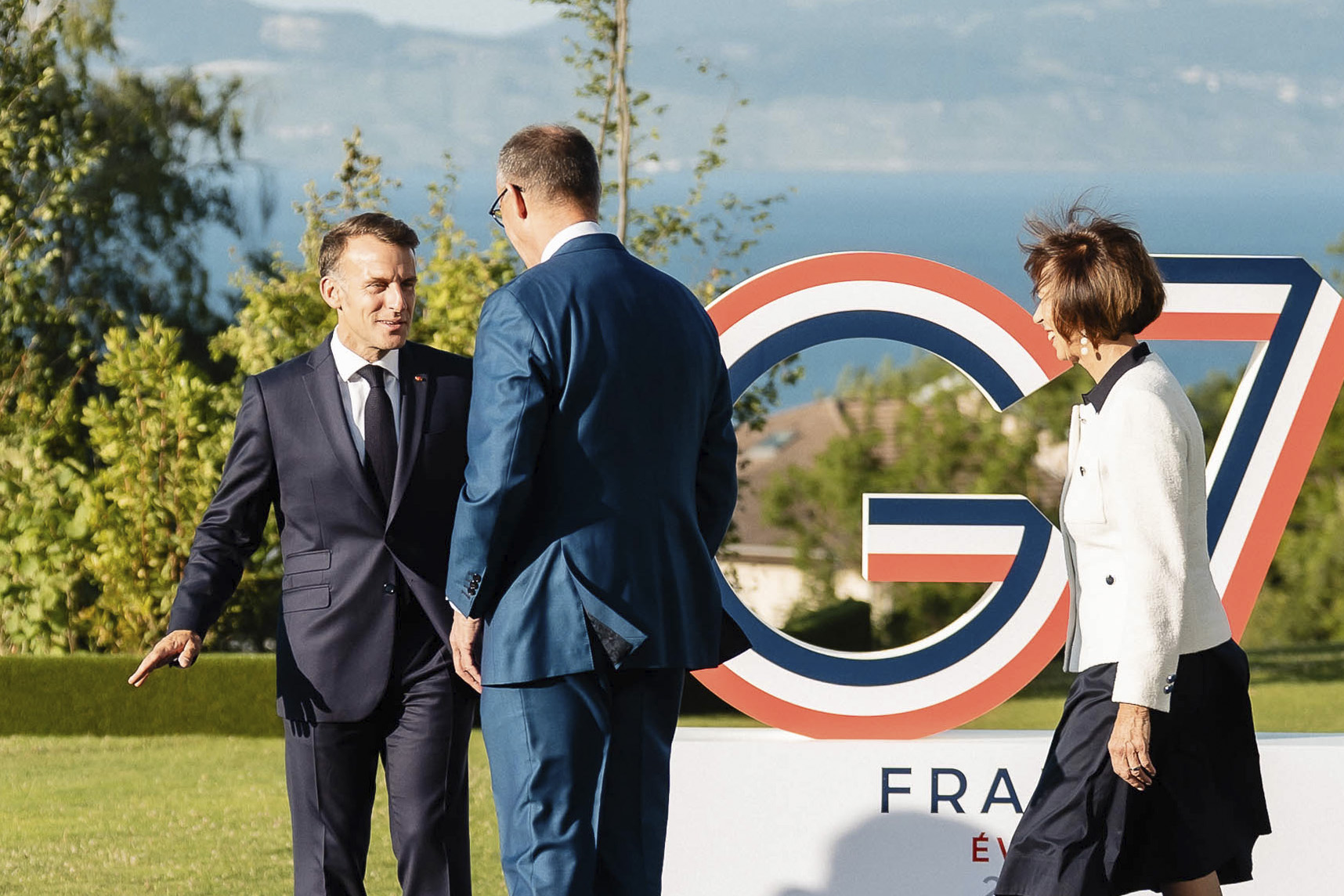
Évian-les-Bains, 15 June 2026: Federal Chancellor Friedrich Merz and his wife, Charlotte Merz, were welcomed by French President Emmanuel Macron to the three-day G7 summit in France.

The summit was attended by the leading industrialised nations – Germany, Canada, France, Italy, Japan, the United Kingdom and the United States of America – as well as representatives of the European Union, such as European Commission President Ursula von der Leyen.

One of the topics on the summit’s agenda was developments in the Middle East. The Chancellor welcomed the agreement between the United States of America and Iran on a peace memorandum. He called for the agreed measures to be implemented in a diligent and purposeful manner. According to Merz, the agreement could pave the way for a recovery in the global economy and stabilisation in the region.

In view of the challenges facing foreign and economic policy, the Federal Government is pursuing clear objectives at the meeting: on the one hand, continued support for Ukraine and de-escalation in the Middle East; on the other hand, cooperation to strengthen the global economy and ensure a secure supply of critical raw materials.

The G7 heads of state and government discussed issues such as these during a series of working sessions at the meeting on Lake Geneva.

In addition, the format offers Federal Chancellor Friedrich Merz the opportunity to hold bilateral talks. On the first evening, he held talks with UK Prime Minister, Keir Starmer.

According to Chancellor Merz, the summit is taking place during an “extremely turbulent period in world politics”. The situation presents challenges, “but also offers some opportunities”, he said, referring to international cooperation.

Évian-les-Bains, 16 June 2026: Ukrainian President Volodymyr Zelenskyy was invited as a guest on the second day.

“Building peace and security for Ukraine and for Europe” was the theme of the first working session of the day. In the run-up to the summit, Federal Chancellor Merz expressed cautious optimism regarding negotiations on a peace settlement.

The G7 heads of state and government agreed to step up the pressure on Russia over the war in Ukraine. US President Trump also wants to reinstate the suspended sanctions against Russian oil exports.

The second working session focused on stability in the Middle East. The President of Egypt and the Prime Minister of Qatar, as well as the President of the United Arab Emirates, Sheikh Mohammed bin Zayed Al Nahyan, travelled to Évian for the occasion.

On the second day, as is traditional, further partner countries also joined the meeting. That’s also when the extended family photo was taken.

During a third working session, they exchanged views on the topic of ‘Forging new partnerships and rebuilding international solidarity’.

At the end of the day, the Chancellor emphasised the "strong sense of transatlantic European unity and European teamwork" during the talks.

Évian-les-Bains, 17 June 2026: The heads of state and government of the G7 countries gathered at the conference venue for the third day of the summit.

The working session focused on boosting economic growth and addressing economic imbalances.

At the conclusion of the summit, the G7 agreed on common positions regarding the conflict in the Middle East and Russia’s war of aggression against Ukraine.

“Democracy is difficult, and diplomacy requires tenacity. "But I think we have been successful in this round of discussions amongst democratic states over the past two days," said Chancellor Merz in his statement at the close of the summit.