Cabinet decision
The Federal Armed Forces are to continue their involvement in NATO’s maritime security operation SEA GUARDIAN in the Mediterranean. The Federal Cabinet has decided to extend the corresponding mandate until 30 November 2026.
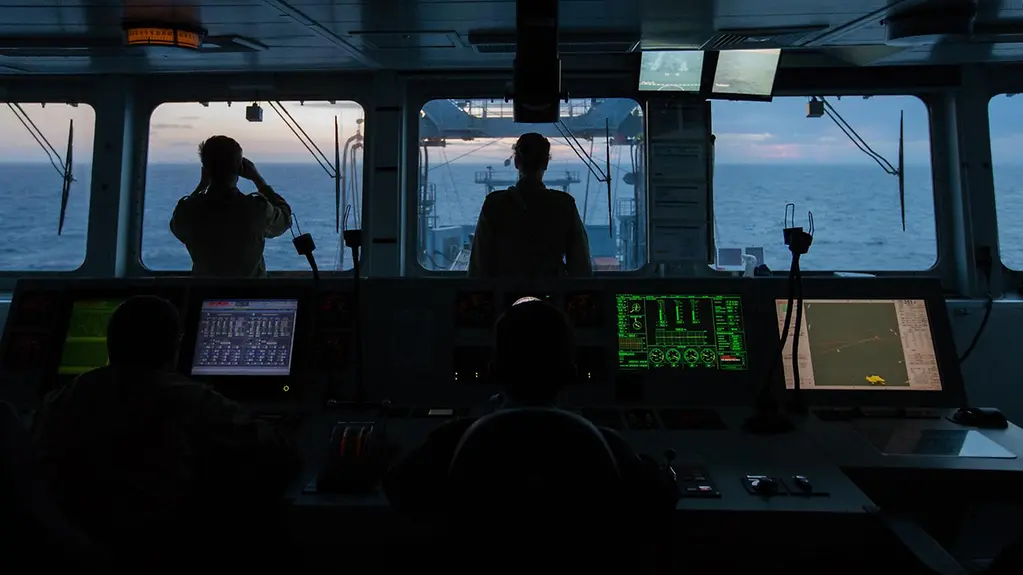
Maritime surveillance makes an important contribution to maritime security.
Photo: Federal Armed Forces / Tom Twardy
The Federal Government has decided to continue the involvement of armed German forces in the NATO-led maritime security operation SEA GUARDIAN. The mission will be extended until 30 November 2026, with deployment of up to 550 soldiers. The Bundestag still has to ratify the resolution.
What are the objectives of the mission in the Mediterranean?
Germany’s security is closely linked to the security and stability of other regions of the world. The Federal Government is therefore determined to actively support the freedom of international sea lines of communication, and SEA GUARDIAN strengthens security in the Mediterranean.
Involvement in SEA GUARDIAN is fully in line with the 360-degree approach of NATO’s Strategic Concept, which aims to counter threats from all directions and of all dimensions. The location of the Mediterranean makes it hugely important: it not only represents the southern border of the European Union but also forms the gateway to our southern neighbours in NATO.
Both Russia’s war of aggression against Ukraine, which violates international law, and the consequences of Hamas’s terrorist attack on Israel on 7 October 2023 have an impact on security in the Mediterranean.
The movement of refugees and migrants also has an impact on the political stability and security situation of neighbouring countries, with repercussions extending as far as continental Europe.
What contribution does Germany make with its involvement in SEA GUARDIAN?
SEA GUARDIAN makes an important contribution to maritime security in the Mediterranean through maritime surveillance and the exchange of information on the situation. The mission has the ability to stop, inspect and search vessels throughout the area of operation if there is any suspicion of a connection to terrorist organisations.
The operation also has a preventative and deterrent effect through the presence of the task forces, which can help to reduce the risk of terrorism and arms smuggling.
Legal basis: German troop deployment in the Mediterranean is based on the decisions of the North Atlantic Council. In addition, the fight against terrorism and arms smuggling in the Mediterranean is rooted in the resolutions of the United Nations Security Council, which include the Convention for the Suppression of Unlawful Acts against the Safety of Maritime Navigation.
German soldiers will be deployed in accordance with the rules of a system of mutual security pursuant to Article 24(2) of the Basic Law. The units are also obliged under international law to provide assistance to people in distress at sea.