Statement by the Chancellor ahead of the Government question time in the German Bundestag
For the second time this year, Chancellor Merz has answered questions from Members of the German Bundestag. In his opening statement to the plenum, he explained the far-reaching proposals for reforming the pension system, in particular.
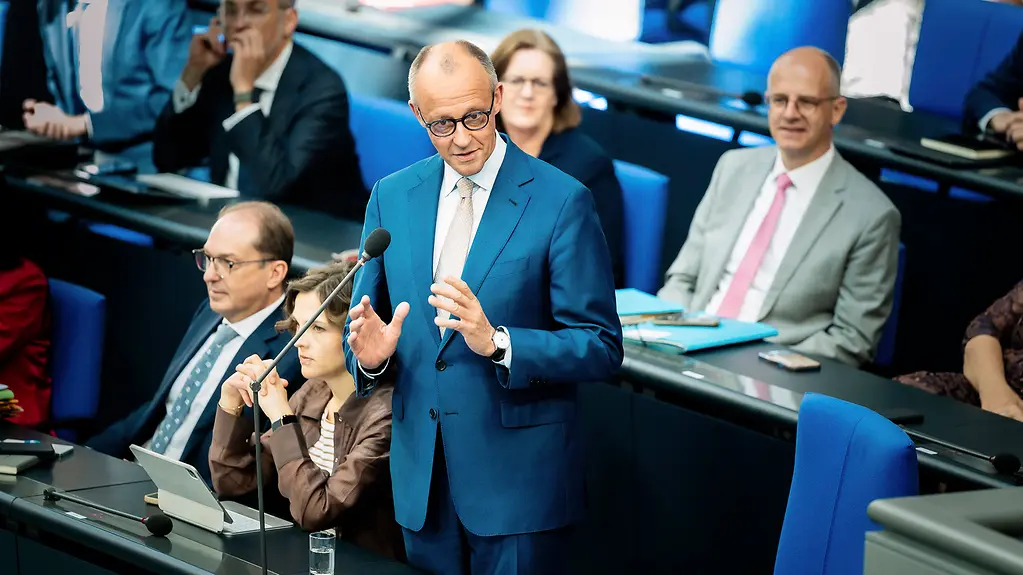
Chancellor Merz routinely takes part in a Government question time session with Members of the German Bundestag.
Photo: Federal Government/Jesco Denzel
The Pensions Commission, set up by the Federal Government, submitted its report on pension reform to the Federal Government on Tuesday. “The findings of this commission represent genuinely far-reaching reform proposals aimed at ensuring the long-term stability of our pension systems,” emphasised the Federal Chancellor in his opening statement ahead of the Government question time in the German Bundestag.
He stressed that this was a major step towards a truly new pension system, referring to the pension reform, which is set to be passed by the German Bundestag by the end of the year. He thanked the members of the commission for their “excellent work”.
Among other things, the Chancellor spoke about…
… opportunities via the capital market
According to Federal Chancellor Friedrich Merz, a central component of the new pension scheme is its expansion to include an additional, compulsory capital-market-based pension. The aim is for these returns to lead to higher pension levels. In other European countries, the capital market has long since been integrated into pension schemes. “We should have done that in Germany a long time ago,” said the Chancellor.
… consistency with Federal Government decisions
In the Federal Chancellor’s view, the commission’s proposals fit in well with decisions that the Federal Government has already taken. He referred to the law on the so-called “active pension”, which came into force on 1 January 2026, and which around 10,000 employees are already said to have taken advantage of. The Chancellor went on to explain that the active pension allows people to continue working beyond the standard retirement age and, in return, to earn up to an extra 24,000 euros tax-free per year. The Federal Chancellor said that the so-called “retirement savings account” – which has already been approved – will also come into force on 1 January 2027. This, he said, will provide people with additional tax incentives and support for their private pension provision.
… boosting competitiveness
The Federal Chancellor also emphasised that Germany’s price competitiveness as a business location must be strengthened. “We will put forward further, very specific proposals on how we can also improve the labour market in Germany and boost the competitiveness of our economy,” the Federal Chancellor explained. While he admitted that these are major challenges, Merz expressed confidence that the tasks this government needs to tackle can indeed be resolved.
The Federal Chancellor takes part in the Government question time in a plenary session of the German Bundestag three times a year: during the final weeks of the parliamentary session before Easter, before the summer recess and before Christmas. At the start of the Government question time, the Chancellor usually makes a brief statement. He then spends about an hour answering questions from MPs.