EU Enlargement
The Republic of Croatia acceded to the European Union on 1 July. Following ratification by all 27 member states, and of course by Croatia itself, the accession procedure is complete.
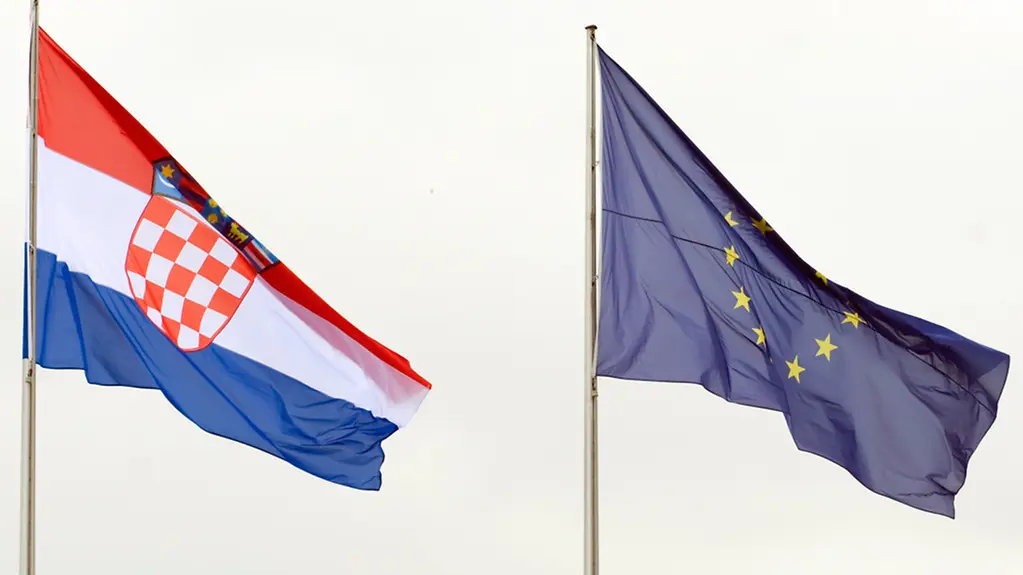
Croatia becomes 28th EU member state
Photo: picture alliance / dpa
On 21 February 2003 Croatia lodged an application to join the European Union. In June 2004 it was accorded the official status of an accession candidate. Since then a great many negotiations have taken place between Croatia and the EU. Reforms have been adopted and targets set.
Welcome to the European Union
Chancellor Angela Merkel was an early supporter of Croatia’s accession to the EU. "Croatia began the accession process in 2004, and has conducted tough negotiations for a great many years."
The heads of state and government of the EU member states and Croatia signed the Treaty concerning the accession of the Republic of Croatia to the European Union on 9 December 2011.
Now the Chancellor welcomes Croatia to the EU. "I would like to congratulate Croatia, which has taken this path with us, and I am delighted that we can now welcome Croatia as a new member."
Europe is growing togetherWith Croatia, the EU now has 28 member states with a total population of more than 505 million. About 220,000 people of Croatian origin currently live in Germany. For them, accession brings them a little bit closer to home. "Croatians living in Germany will be able to vote in European elections and local elections in future, and will have to deal with a lot less red tape," said the Chancellor in her video podcast.
Croatia will adopt the entire body of EU law. As usual, provisional regulations exist in several areas, so as to manage adjustment processes. Accession means that Croatians now enjoy the rights of EU citizens, including freedom of movement, diplomatic protection, a ban on discrimination and the right to petition EU institutions. They will also be able to vote in European elections and in local elections in Germany.