France is due to take over the Presidency of the Council of the European Union on 1 January. It will lead the EU Council for six months. Founding state and driving force behind European unification, Germany’s close partner and neighbour: see here for more information about the country and its role in the EU.

France is Germany’s most important partner in Europe. As European integration progressed after the Second World War, the two countries began to build close relations. They are often regarded as a model of reconciliation between two nations. In 1957, France and Germany were among the six founding members of the European Economic Community (EEC) – the core of today’s EU. Franco-German friendship was sealed in 1963 under the Élysée Treaty, which also included close relations at the level of civil society.
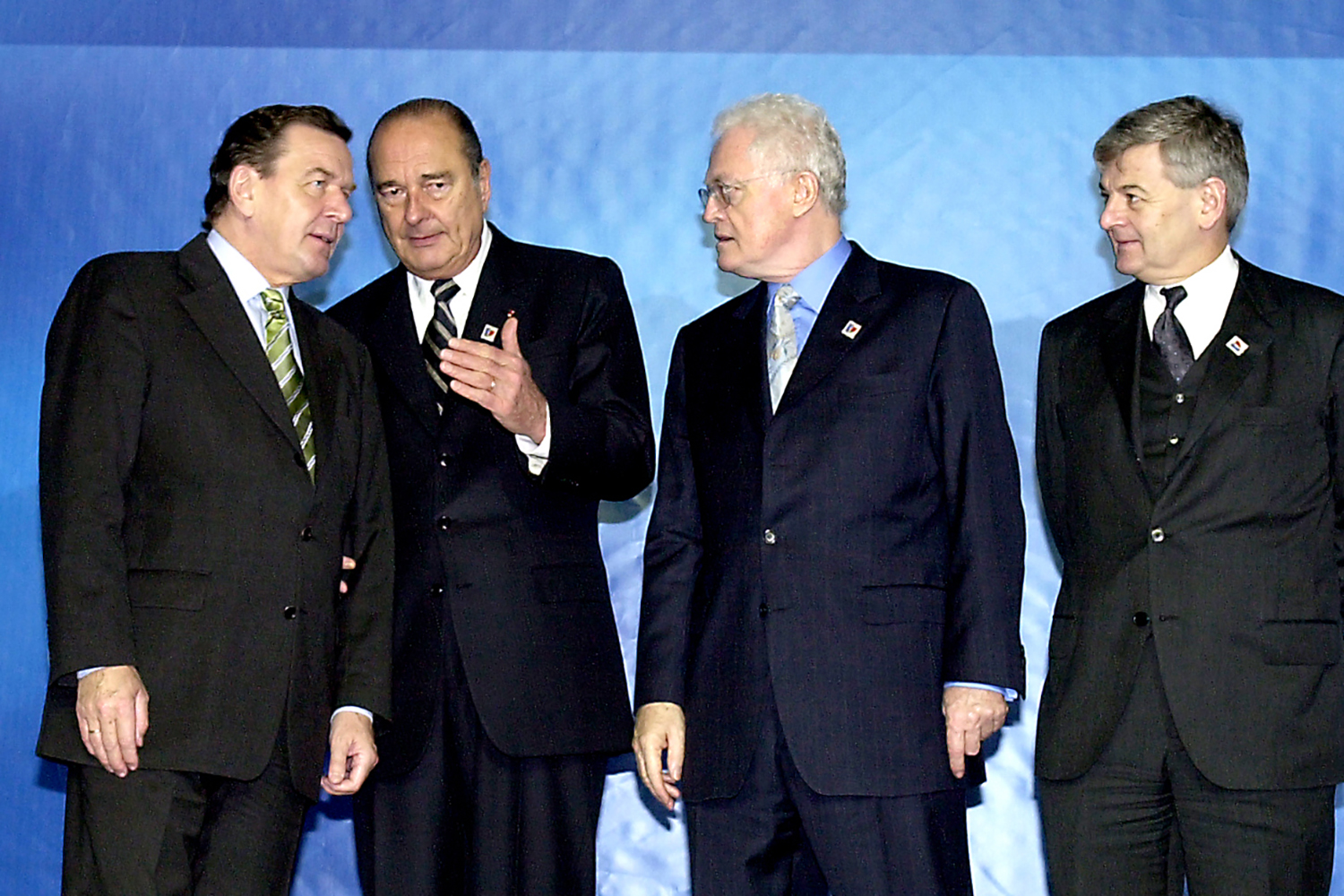
France took over the EU Council Presidency for the 13th time. One date during a French Presidency that will go down in EU history is 11 December 2000: this was the day the heads of state and government adopted the Treaty of Nice. The following were present on the German side: then Federal Chancellor Schröder (1st from left) and Foreign Minister Fischer (4th from left), here with French President Chirac (2nd from left) and Prime Minister Jospin (3rd from left). The agreement initiated reforms mainly with a view to preparing the European Union for its forthcoming expansion to the east and south: twelve new EU member states were to be added to the existing total of 15.

The motto of the French EU Presidency 2022 is: “Relance, Puissance, Appartenance” – “Recovery, Strength, Sense of Belonging”. Recovery and economic growth are to be the driving force behind the digital and ecological transition in Europe. “Strength” relates to the protection and reinforcement of Europe’s values and interests. “Sense of Belonging” concerns the creation and further development of the common European consciousness that arises from our culture as well as our shared values and history.

In terms of surface area, France is the biggest country in the EU with 645,000 square kilometres – ahead of Spain, Sweden and Germany. With 67.4 million inhabitants, it ranks second behind Germany in terms of population. France’s national territory consists of 18 regions. Of these, 13 are located in Europe while five are overseas. The overseas regions such as Martinique and La Réunion are considered parts of the EU. They do not belong to the Schengen Area, however, and do not fall under the EU’s excise duty, though they do have the euro as their currency.

Still an agricultural and colonial state in 1945, France swiftly developed into an industrial and service-based society. The most important economic sectors as of 2018 were public administration, defence, education, healthcare and social services (22.4 percent). This was followed by the wholesale and retail trade, transport and hospitality (17.8 percent). 59 percent of France’s exports go to EU countries, most of them to Germany (14 percent). 69 per cent of its imports come from EU member states, such as Germany (18 percent), Belgium (10 percent) and the Netherlands (8 percent).

Paris is the capital of France as well as its pre-eminent cultural and economic centre. With a surface area of 105 square kilometres and a population of 2.1 million, it is by far the biggest city in the country. It has six international railway stations and is the most important transport hub in France. Tourism also has a key role to play: Paris is one of the most frequently visited cities in the world due to its many sights and cultural attractions.