- E-mail, The Day the Berlin Wall fell in November 1989
- Facebook, The Day the Berlin Wall fell in November 1989
Share the article
- E-Mail E-mail, The Day the Berlin Wall fell in November 1989
- Facebook Facebook, The Day the Berlin Wall fell in November 1989
- X X, The Day the Berlin Wall fell in November 1989
- Threema , The Day the Berlin Wall fell in November 1989
- WhatsApp share via Whatsapp, The Day the Berlin Wall fell in November 1989
Since September 1989 regular Monday demonstrations for freedom of opinion and the freedom to travel had been held in Leipzig and other towns and cities in the German Democratic Republic.
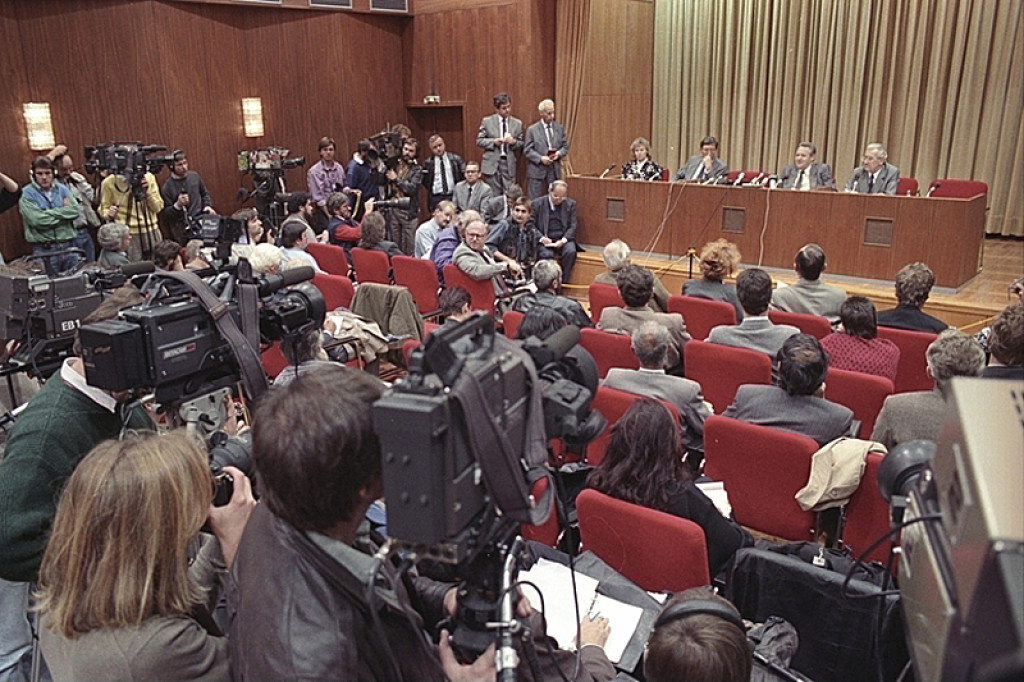
On 9 November 1989 Günter Schabowski announced to the press that the Politburo had agreed on a new liberalised travel regime. When asked when the new regulations were to come into effect, he answered, "Immediately! Without delay!"
Within hours the people were streaming to Berlin’s border crossing points. The first people from East and West Berlin meet here and embrace at the Invalidenstraße border crossing point.
The first East Germans make it by car to West Berlin’s Kurfürstendamm where they are given an exuberant welcome.
Before the night was out the first "Wall woodpeckers" were out carving souvenirs from the top of the Wall ,...
... and more and more joined them the following day. It was the beginning of the end of the Wall.
On the morning of 10 November 1989 thousands of people gathered beside and on top of the Wall by the Brandenburg Gate.
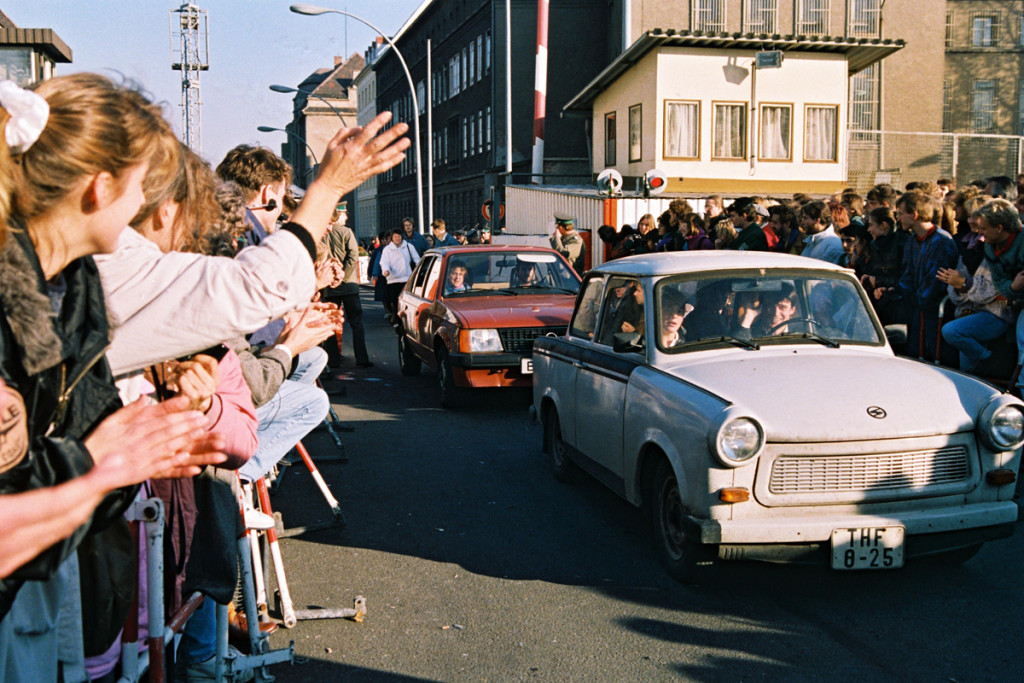
People from West Berlin came to welcome the increasing waves of East Germans at border crossing points like this one in the Invalidenstraße.
The line of East German Trabants and Wartburgs at the border crossing point Helmstedt/Marienborn seems endless.
Here too the visitors from the East are given a rousing welcome in the West.
In Berlin the East German police officers are helpless to do anything about the people now crowding onto the top of the Wall.
The Oberbaumbrücke border crossing point is hopelessly overcrowded. There is a huge tailback of people waiting to cross to West Berlin.
At the Schlesische Allee/Puschkinallee crossing point the East German visitors are welcomed with flowers.
The crowds wanting to cross to West Berlin are so enormous that on 12 November the first sections of the Wall were removed at the Potsdamer Platz to open up a new border crossing point.
People pour into West Berlin through the huge gaps in the Wall at the Potsdamer Platz.
Today the Berlin Wall has all but vanished. But the East Side Gallery, where artists have painted sections of the Wall ...
... and the memorial site "Berlin Wall" at the Bernauer Straße keep alive memories of the dark days when Germany was divided.
Since September 1989 regular Monday demonstrations for freedom of opinion and the freedom to travel had been held in Leipzig and other towns and cities in the German Democratic Republic.
On 9 November 1989 Günter Schabowski announced to the press that the Politburo had agreed on a new liberalised travel regime. When asked when the new regulations were to come into effect, he answered, "Immediately! Without delay!"
Within hours the people were streaming to Berlin’s border crossing points. The first people from East and West Berlin meet here and embrace at the Invalidenstraße border crossing point.
The first East Germans make it by car to West Berlin’s Kurfürstendamm where they are given an exuberant welcome.
Before the night was out the first "Wall woodpeckers" were out carving souvenirs from the top of the Wall ,...
... and more and more joined them the following day. It was the beginning of the end of the Wall.
On the morning of 10 November 1989 thousands of people gathered beside and on top of the Wall by the Brandenburg Gate.
People from West Berlin came to welcome the increasing waves of East Germans at border crossing points like this one in the Invalidenstraße.
The line of East German Trabants and Wartburgs at the border crossing point Helmstedt/Marienborn seems endless.
Here too the visitors from the East are given a rousing welcome in the West.
In Berlin the East German police officers are helpless to do anything about the people now crowding onto the top of the Wall.
The Oberbaumbrücke border crossing point is hopelessly overcrowded. There is a huge tailback of people waiting to cross to West Berlin.
At the Schlesische Allee/Puschkinallee crossing point the East German visitors are welcomed with flowers.
The crowds wanting to cross to West Berlin are so enormous that on 12 November the first sections of the Wall were removed at the Potsdamer Platz to open up a new border crossing point.
People pour into West Berlin through the huge gaps in the Wall at the Potsdamer Platz.
Today the Berlin Wall has all but vanished. But the East Side Gallery, where artists have painted sections of the Wall ...
... and the memorial site "Berlin Wall" at the Bernauer Straße keep alive memories of the dark days when Germany was divided.