28 July 1999 marked the end of an era when the Federal Cabinet met for its last regular session in Bonn. Over the following weeks the government successively moved to Berlin, after 50 years of working on the banks of the Rhine. A retrospective in photos.
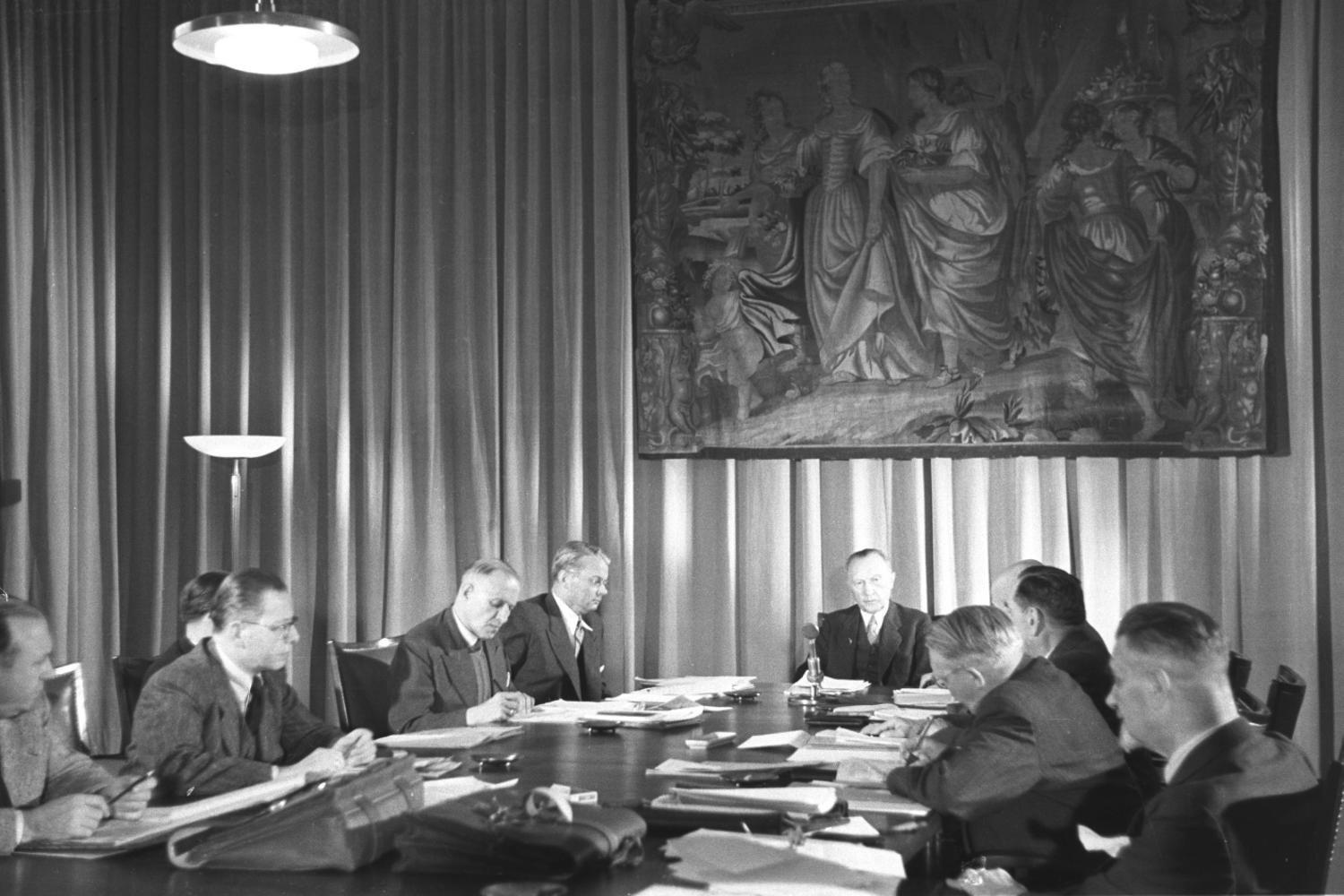
It all began with a makeshift solution: Following the election, in September 1949, of Konrad Adenauer as Germany's first Federal Chancellor, the Museum König in Bonn was the first home to the Federal Chancellery. As this photo shows, this is where the first Cabinet meetings were held. Konrad Adenauer sits at the head of the table. The Zoological Research Museum Alexander König emerged largely unscathed from World War II, and had previously hosted the ceremony to mark the opening of the Parliamentary Council on 1 September 1948.

In November 1949 the Palais Schaumburg became the official seat of the Federal Chancellery. In January 1950 Chancellor Konrad Adenauer received his first state guest there: French Foreign Minister Robert Schumann. The photo is of the Chancellor's office.
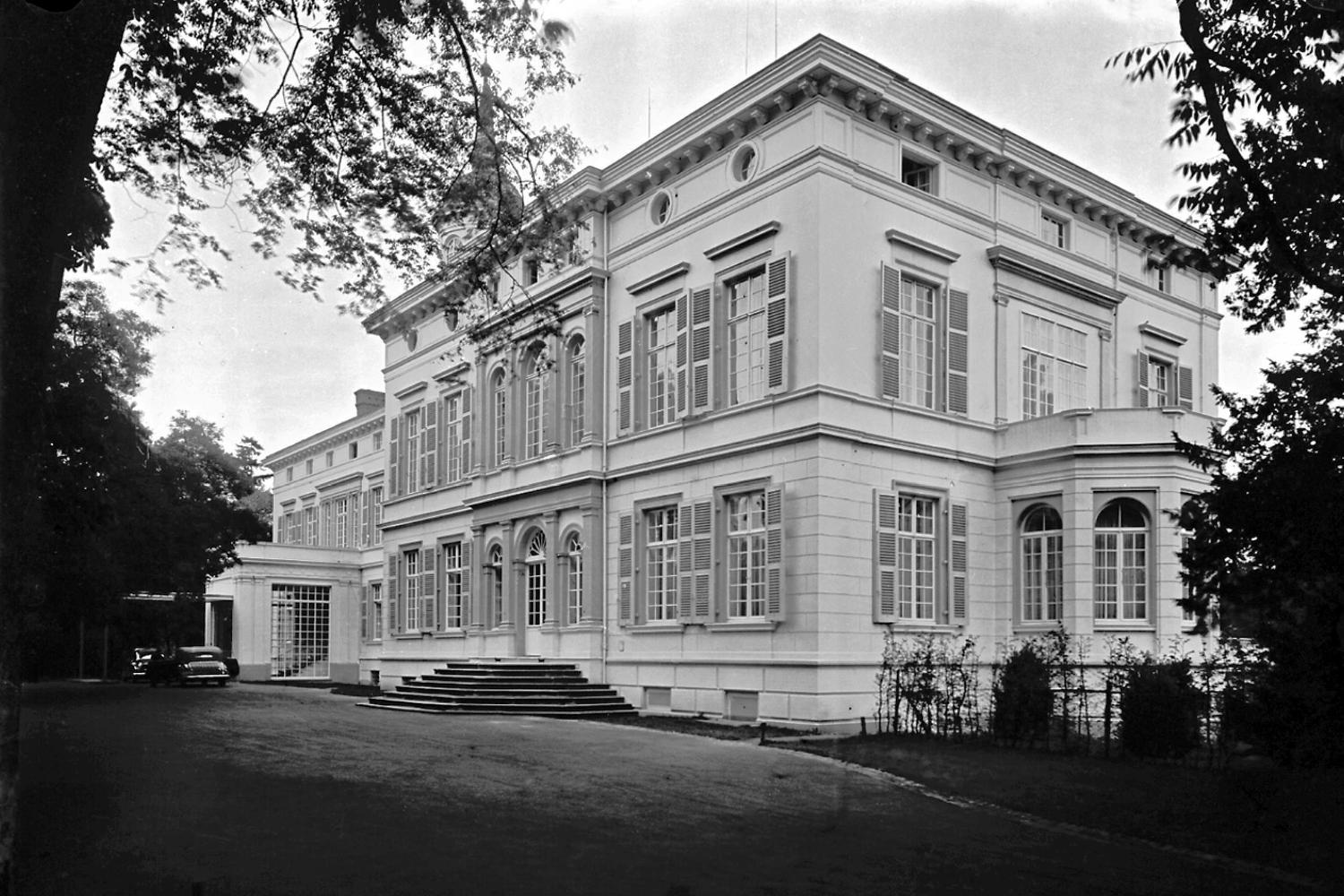
Millionaire's mansion, palace for princes, soldiers' quarters, seat of the Federal Chancellor: The Palais Schaumburg, built in 1858, can look back on a varied history. It stands on the western banks of the Rhine and was renovated and extended while Konrad Adenauer was Chancellor.
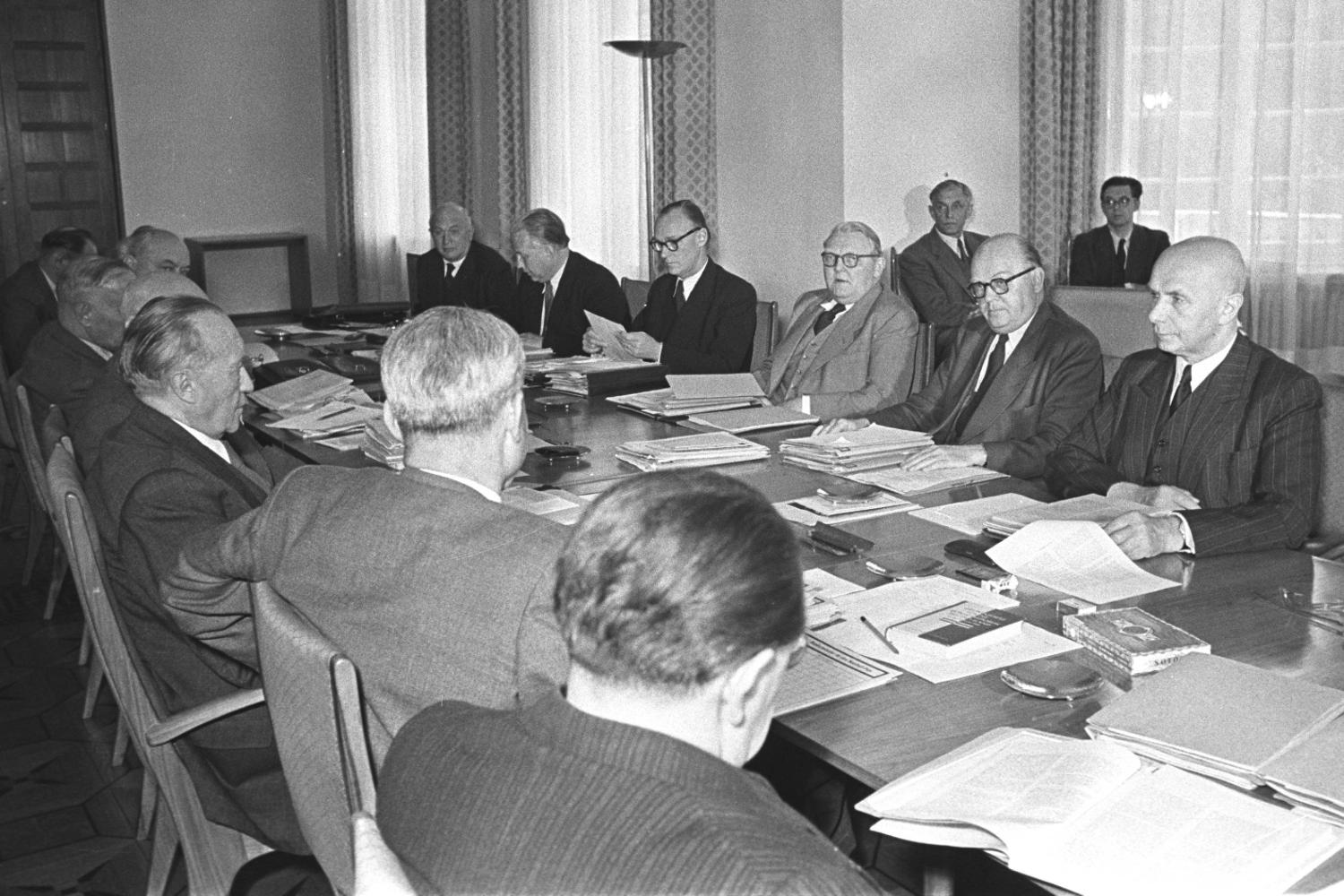
The Federal Cabinet met in the Cabinet room in the Palais Schaumburg. The photo shows the following, among others: Jakob Kaiser, Federal Minister for All-German Affairs (right), the Federal Economics Minister and subsequent Chancellor, Ludwig Erhard (third from right) and Chancellor Konrad Adenauer (centre, on left of table).

A rare occurrence: In July 1967 the Federal Cabinet under Chancellor Kurt Georg Kiesinger (second from left) met in the park in the grounds of the Palais Schaumburg. Kiesinger was head of the first CDU/CSU/SPD Grand Coalition from 1966 to 1969. Willy Brandt (on Kiesinger's left), who would later become Chancellor, also took part in the meeting.

More tasks meant the government needed more space: In November 1973 the ground-breaking ceremony was held for the new Federal Chancellery building right next to the Palais Schaumburg. The topping out ceremony was held there in October 1974.

Chancellor Helmut Schmidt received the keys to the newbuild on 1 July 1976. The first Cabinet meeting was held in the new Federal Chancellery on 7 July 1976.

The new Federal Chancellery from a bird's eye perspective, with the Rhine in the background.

View of the new Cabinet room in the Federal Chancellery with Ernst Ludwig Kirchner's "Mountain Farmers on Sunday" on the wall in the background. The Cabinet table measures 9 metres by 3.36 metres. The Federal Cabinet met in this room for 23 years.

The Federal Chancellery forecourt. The bronze sculpture entitled "Large Two Forms" by Henry Moore was placed here in 1979 while Helmut Schmidt was still Chancellor. This view was familiar to many people from watching the TV news.

A view of Helmut Kohl's office after he was elected as Federal Chancellor in 1982.
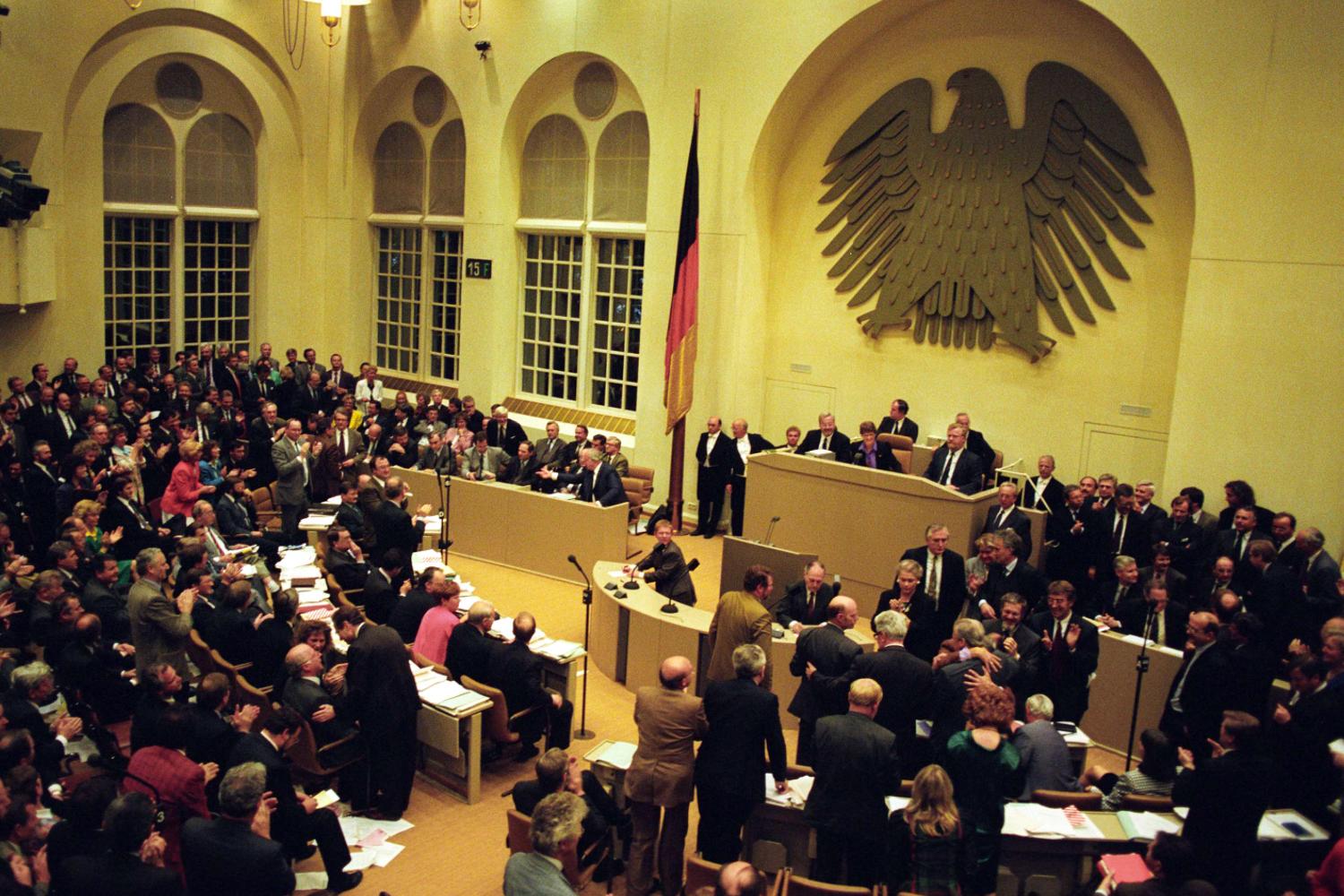
Narrow majority in favour of moving: After reunification the German Bundestag voted in 1991 to move the seat of government to Berlin. Following a lengthy debate, 337 Members of the Bundestag voted for Berlin, 320 for Bonn. The decision was very close all along.

In 1998 Chancellor Gerhard Schröder moved into the Federal Chancellery in Bonn. The photo shows a view of his ofice.
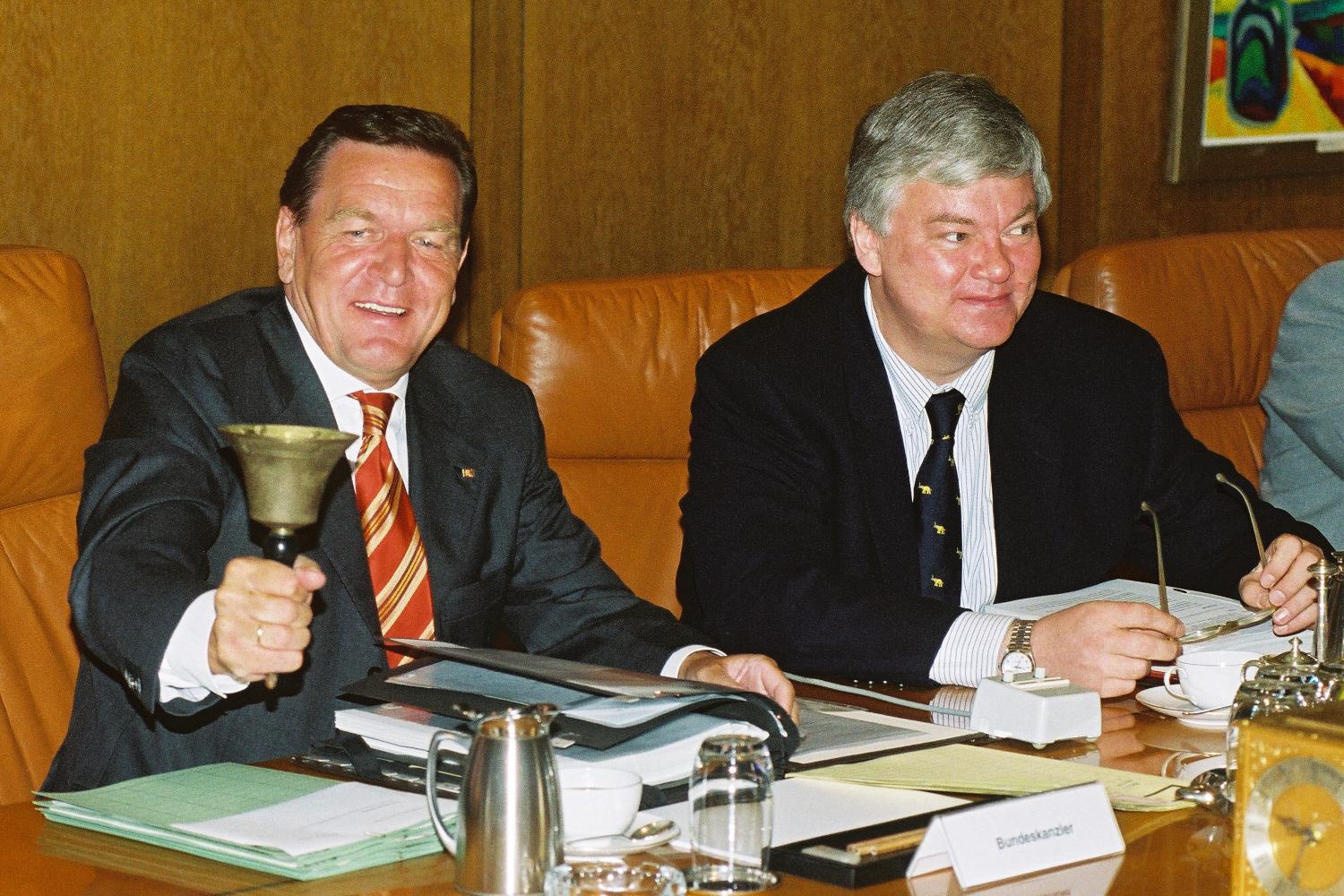
On 28 July 1999 Chancellor Gerhard Schröder rang the bell to open the last Cabinet meeting to be held in Bonn. Sitting on his right is Bodo Hombach, Federal Minister for Special Affairs.
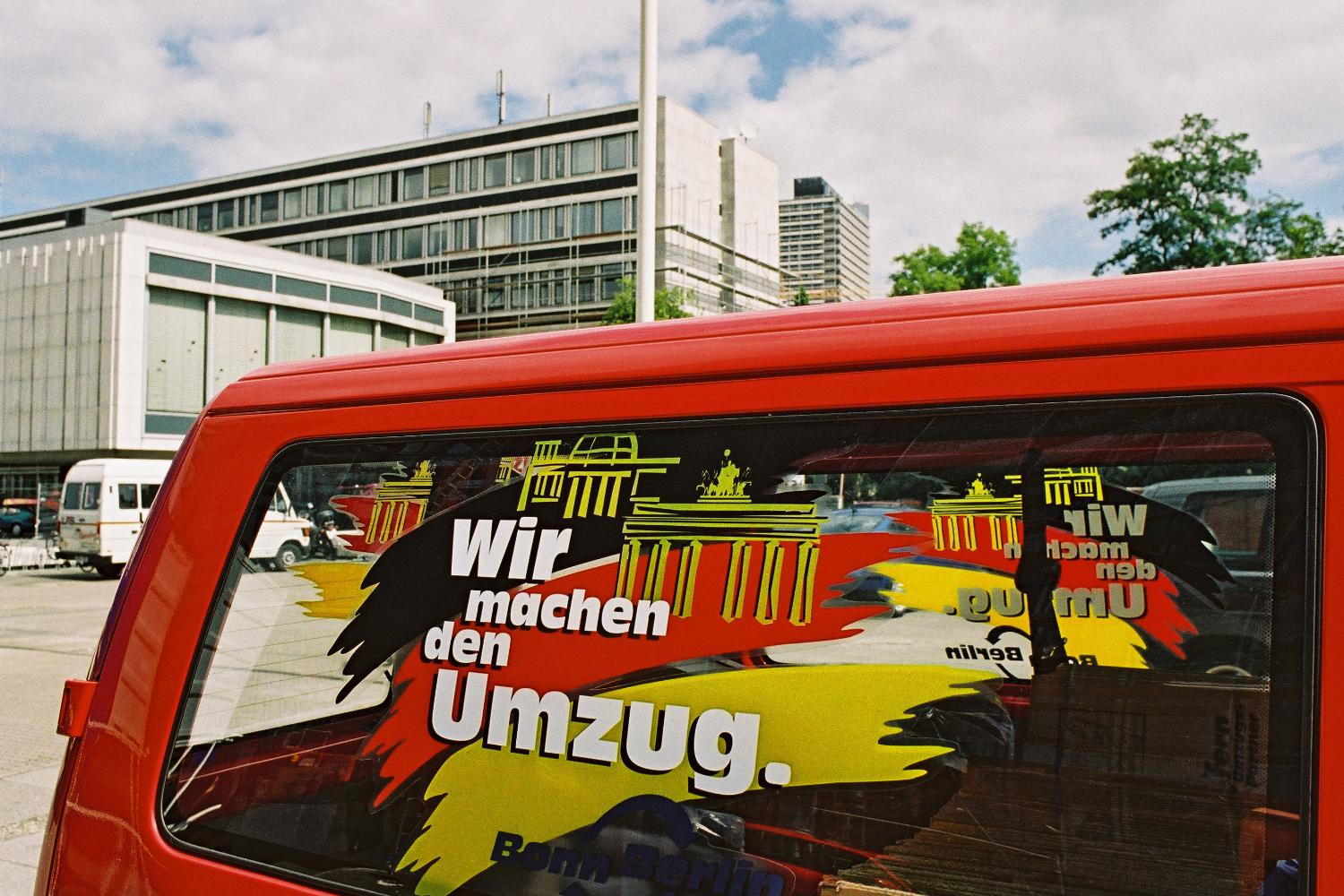
Then everything had to be packed up in boxes. A removal company advertised its involvement by painting the slogan "We're doing the move" on the side of its van. After 50 years the seat of the German government moved from the banks of the Rhine to the Spree.

In the summer of 1999 the area in front of the Federal Chancellery where state visitors used to be received was taken over by removal vans. On the left: the "Langer Eugen" building which housed the offices of the Members of the German Bundestag. The Parliament also moved its seat to Berlin. The "Langer Eugen" is now part of the UN Campus in Bonn.