For 28 years the Berlin Wall was symbolic of the division into East and West. In night of 9 November 1989 the Berlin Wall fell - and nothing could stop German reunification any more. Remains of the Wall can be found not only in Berlin, but all over Europe, and indeed all over the world. They are both a warning and a symbol of freedom.
- E-mail, A piece of the Berlin Wall - a warning and a symbol of freedom
- Facebook, A piece of the Berlin Wall - a warning and a symbol of freedom
Share the article
- E-Mail E-mail, A piece of the Berlin Wall - a warning and a symbol of freedom
- Facebook Facebook, A piece of the Berlin Wall - a warning and a symbol of freedom
- X X, A piece of the Berlin Wall - a warning and a symbol of freedom
- Threema , A piece of the Berlin Wall - a warning and a symbol of freedom
- WhatsApp share via Whatsapp, A piece of the Berlin Wall - a warning and a symbol of freedom
The section of the Berlin Wall directly in front of the European Commission headquarters in Brussels is a symbol of the reunited Europe. The 3.6 metres high, 3 tonne concrete slab bears an image of former US President John F. Kennedy. The monument was officially unveiled in front of the Berlaymont building in 2015 to mark the 25th anniversary of German reunification.
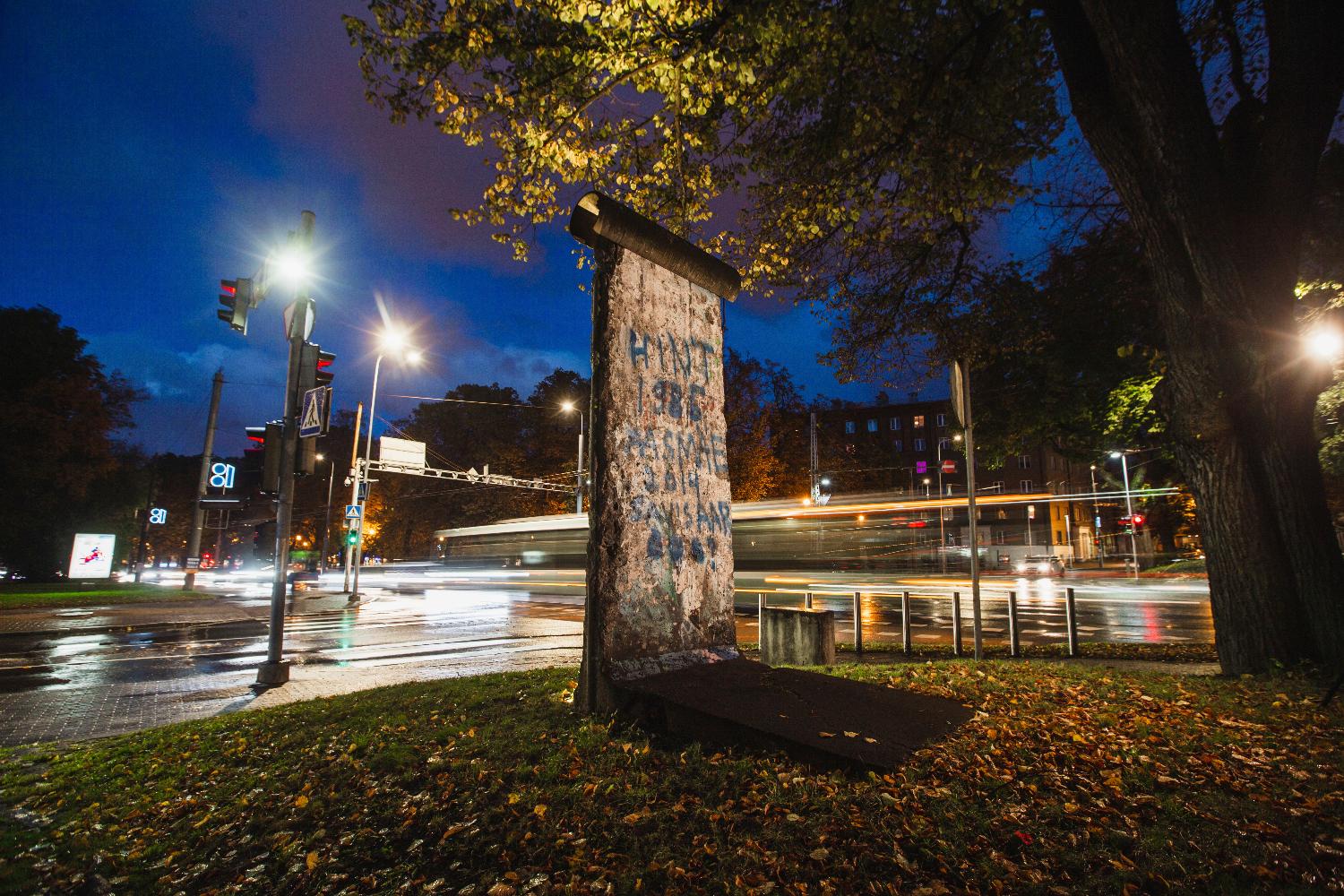
Since 2014, a section of the Berlin Wall has stood in front of the Museum of Occupations and Freedom in the Estonian capital. This part of the wall originally stood at the Potsdamer Platz. When the monument was unveiled in Tallinn to mark the 25th anniversary of the fall of the Berlin Wall, the Estonian State Secretary Heiki Loot said the wall could be interpreted in two ways. Firstly, it symbolises the atrocities of inhuman dictatorships and secondly the joy of liberation.
The Berlin Wall can also be found in many places outside Europe. Three sections that originally stood on Berlin’s Leipziger Platz can today be found in the garden of the United Nations in New York. In 2002 the then Bundestag President Wolfgang Thierse presented them to Kofi Annan, then UN Secretary-General. At the celebrations to mark the presentation, Kofi Annan stressed that the fall of the Berlin Wall helped liberate the entire i
In 2005, the South Korean capital Seoul opened its Berlin Square. Alongside the three sections of the Berlin Wall, and the bear that is so symbolic of Berlin, there are also original Berlin benches and trees and even a street lamp. Like Berlin during the Cold War, Korea’s history is one of division. The monument is intended to express the hope that one day South and North Korea can be reunited.
The section of the Berlin Wall directly in front of the European Commission headquarters in Brussels is a symbol of the reunited Europe. The 3.6 metres high, 3 tonne concrete slab bears an image of former US President John F. Kennedy. The monument was officially unveiled in front of the Berlaymont building in 2015 to mark the 25th anniversary of German reunification.
Since 2014, a section of the Berlin Wall has stood in front of the Museum of Occupations and Freedom in the Estonian capital. This part of the wall originally stood at the Potsdamer Platz. When the monument was unveiled in Tallinn to mark the 25th anniversary of the fall of the Berlin Wall, the Estonian State Secretary Heiki Loot said the wall could be interpreted in two ways. Firstly, it symbolises the atrocities of inhuman dictatorships and secondly the joy of liberation.
The Berlin Wall can also be found in many places outside Europe. Three sections that originally stood on Berlin’s Leipziger Platz can today be found in the garden of the United Nations in New York. In 2002 the then Bundestag President Wolfgang Thierse presented them to Kofi Annan, then UN Secretary-General. At the celebrations to mark the presentation, Kofi Annan stressed that the fall of the Berlin Wall helped liberate the entire i
In 2005, the South Korean capital Seoul opened its Berlin Square. Alongside the three sections of the Berlin Wall, and the bear that is so symbolic of Berlin, there are also original Berlin benches and trees and even a street lamp. Like Berlin during the Cold War, Korea’s history is one of division. The monument is intended to express the hope that one day South and North Korea can be reunited.