Photo series
From Adenauer to Scholz – Government Spokespersons always were and still are close by at the Federal Chancellor's side. Here we present a selection of the spokespersons and heads of the Federal Government Press and Information Office since the founding of the Federal Republic.
- E-mail, The Government Spokespersons – a historical overview
- Facebook, The Government Spokespersons – a historical overview
Share the article
- E-Mail E-mail, The Government Spokespersons – a historical overview
- Facebook Facebook, The Government Spokespersons – a historical overview
- X X, The Government Spokespersons – a historical overview
- Threema , The Government Spokespersons – a historical overview
- WhatsApp share via Whatsapp, The Government Spokespersons – a historical overview
Permanent Secretary Felix von Eckardt served as Government Spokesperson under Federal Chancellor Konrad Adenauer. The photo shows Konrad Adenauer (l.) talking to Felix von Eckardt on the patio of Palais Schaumburg. Felix von Eckardt is the spokesperson with the second longest tenure in the history of the Federal Press Office. This photo was taken in 1961.
The first Federal Chancellor of the Federal Republic of Germany, Konrad Adenauer (1949-1963), at his home office in Rhöndorf. He remained in office for 14 years and was the defining personality during the founding years of the Federal Republic. His name is inextricably associated with the reconstruction of democratic and economic structures in West Germany after the Second World War. This photo was taken in 1949.
Adenauer was succeeded as Federal Chancellor by Ludwig Erhard (1963-1966). This photo was taken in the saloon car of his special train in 1964. Erhard had already served as Minister of Economics in Konrad Adenauer's government. His name is associated with the introduction of the Deutsche Mark in 1948 ("currency reform").
Government Spokesperson Karl Günther von Hase (l.) took over as head of the Federal Press Office in 1964. This photo with Federal Chancellor Erhard was also taken in 1964.
Kurt Georg Kiesinger (r.) was elected Federal Chancellor in 1966. Germany's first grand coalition managed to overcome an economic crisis under his leadership: the economy was no longer as prosperous as it had been in previous years and unemployment was on the rise. The government dealt with these problems. Günter Diehl (l.) was Kiesinger's spokesperson.
Kiesinger was succeeded as Federal Chancellor by Willy Brandt: his term as Federal Chancellor was characterised by socio-political liberalisation, the slogan "dare more democracy", and a new policy towards Eastern Europe. This photo shows Brandt (centre) in the Federal Press Office in 1973; to his right (with pipe) stands Government Spokesperson Rüdiger von Wechmar.
Also active during Willy Brandt's term in office: Government Spokesperson Conrad Ahlers (l.) – shown here talking to journalists in 1970.
Helmut Schmidt became the Federal Chancellor in 1974. He had to cope with economic crises and counter Red Army Faction (RAF) terrorism. He was supported by Government Spokesperson Klaus Bölling from 1974 to 1981 – shown here in a photo taken in 1980.
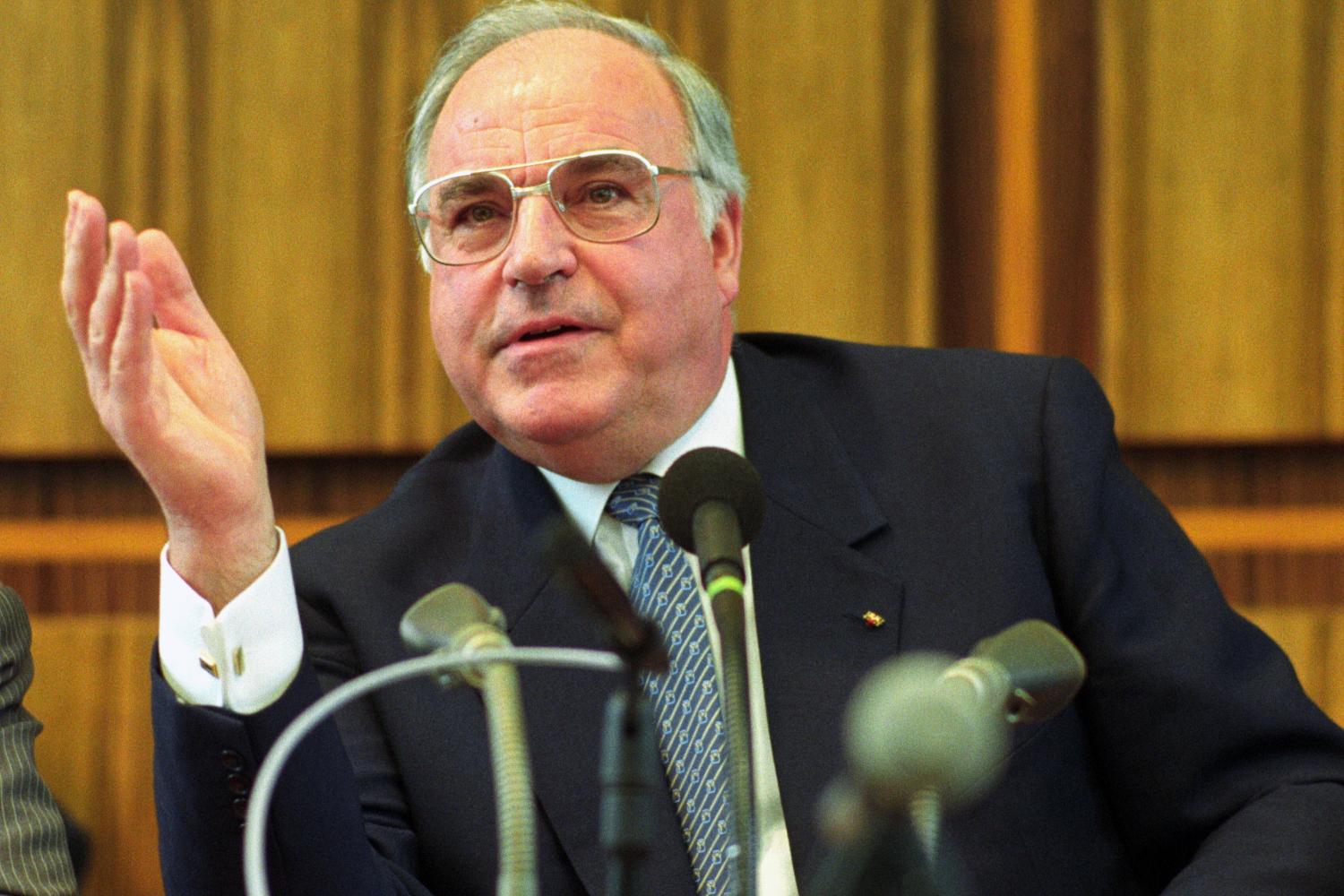
Helmut Kohl was elected Federal Chancellor in 1982 and would remain in office for 16 years. Many remember him as the "Federal Chancellor of Unity". This photo was taken in the Federal Press Conference building in 1990.
The first Government Spokesperson to serve under Federal Chancellor Kohl was Diether Stolze (r.). Also shown in the photo: Jürgen Sudhoff, Deputy Government Spokesperson (with megaphone). This photo was taken in 1982.
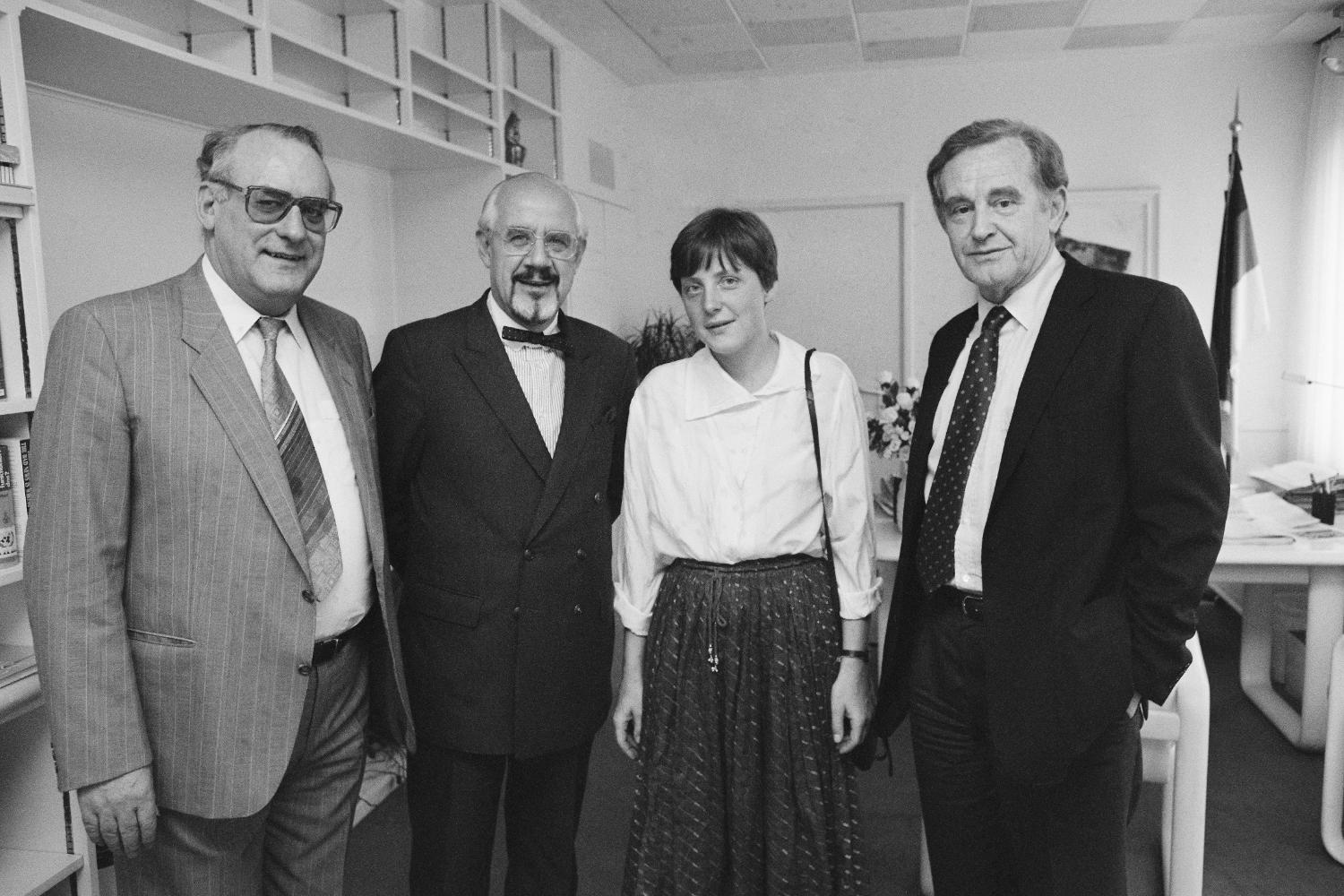
Government Spokesperson Hans Klein's term in office also fell within the Kohl era (2nd l). In this photo he is shown receiving the GDR's deputy Government Spokesperson, Angela Merkel, in 1990.
The new Federal Chancellor in 1998 is Gerhard Schröder (l). His tenure as Federal Chancellor was marked by the NATO mission in Kosovo, the phasing out of nuclear energy, and the Agenda 2010 reforms. This photo shows the Federal Chancellor talking to his Government Spokesperson Uwe-Karsten Heye (r.) – the photo was taken in 1999.
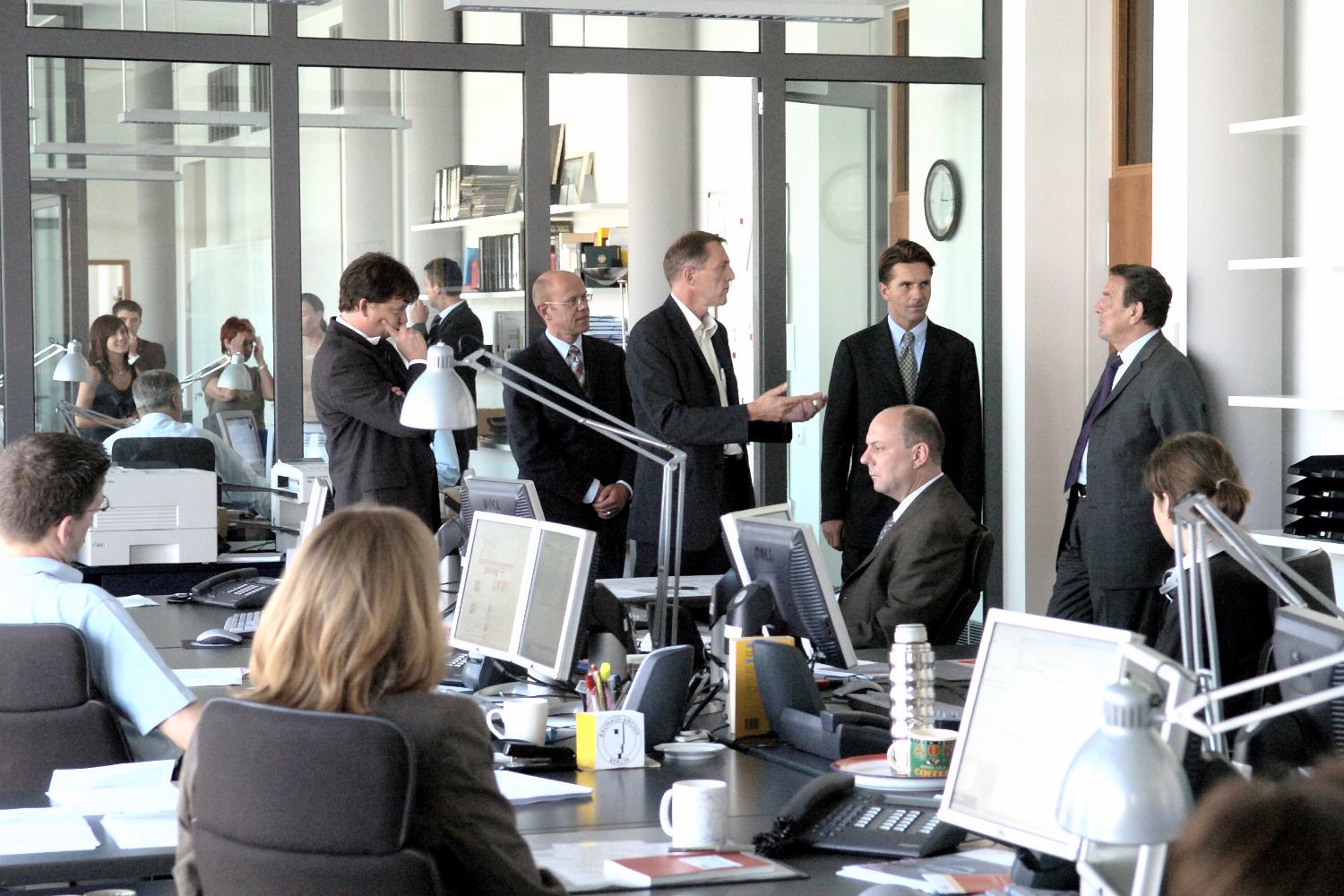
By then, the Federal Press Office had moved from Bonn to Berlin. Schröder observed the work being carried out in the newly designed rooms during a site visit in 2004. Government Spokesperson Béla Anda (2nd from right) succeeded Uwe-Karsten Heye in 2002.
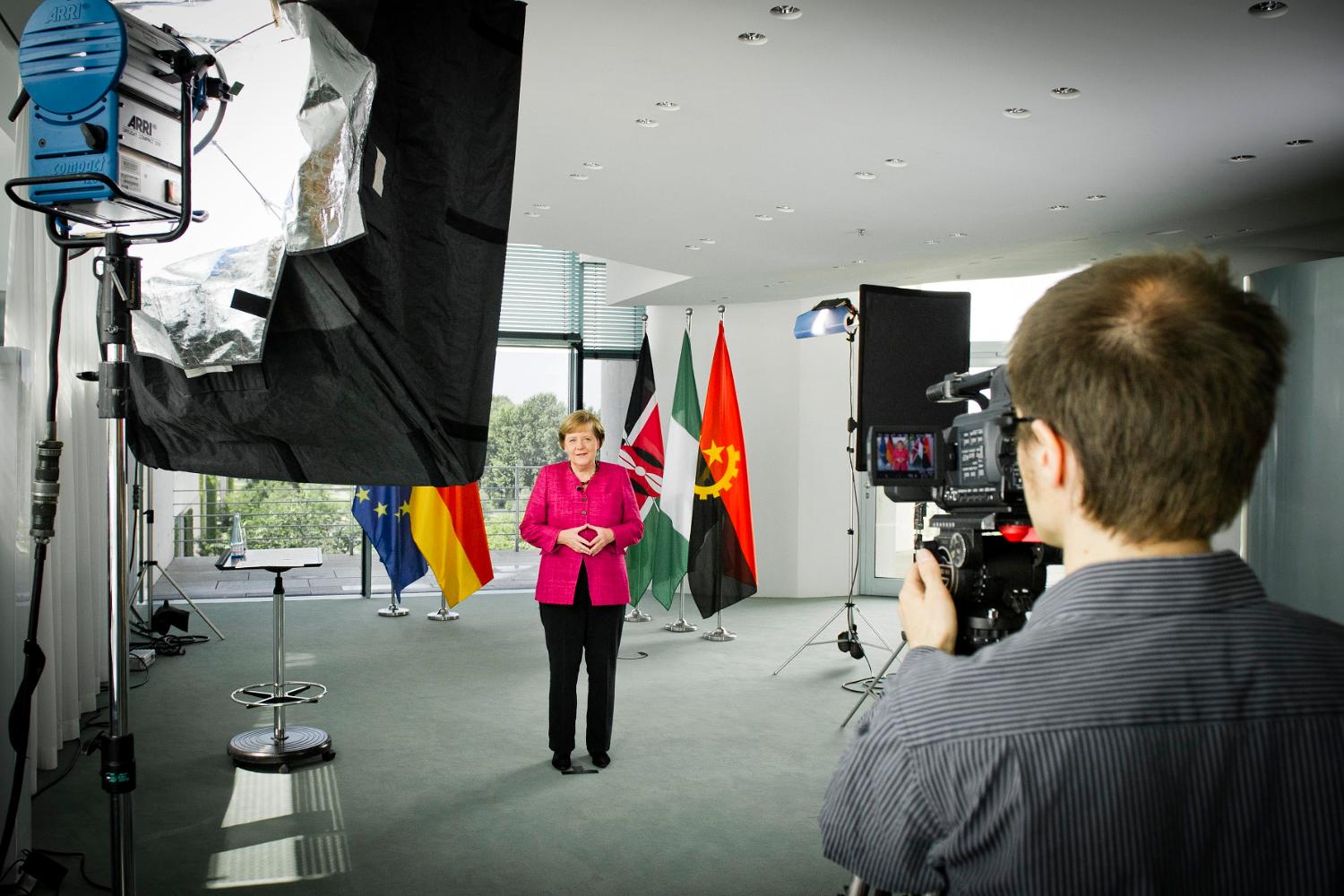
Angela Merkel was the Federal Chancellor from 2005 to 2021. Merkel, who holds a doctorate in physics, was the first woman to lead the Federal Government. Social media channels and multimedia formats, such as the weekly podcast, became more important for the Federal Press Office. This photo shows the Federal Chancellor at a podcast recording in 2011.
At the Federal Chancellor's side from 2010 to 2021 was spokesperson Steffen Seibert (r.), shown here on his way to a press conference during the G7 Summit at Schloss Elmau in 2015. Seibert is the longest serving Government Spokesperson to date.
Olaf Scholz was to become Federal Chancellor in 2021. A so-called "traffic light" coalition is formed at the federal level for the first time ever. The common goal is to drive forward the modernisation of the state, economy, and society.
Steffen Hebestreit (l.) was officially inaugurated as Government Spokesperson by Federal Chancellor Scholz on 9 December 2021. His deputies are Christiane Hoffmann (r.) and Wolfgang Büchner (c.). This photo shows the spokesperson team on the sidelines of a cabinet meeting in Meseberg Castle in 2022.
Permanent Secretary Felix von Eckardt served as Government Spokesperson under Federal Chancellor Konrad Adenauer. The photo shows Konrad Adenauer (l.) talking to Felix von Eckardt on the patio of Palais Schaumburg. Felix von Eckardt is the spokesperson with the second longest tenure in the history of the Federal Press Office. This photo was taken in 1961.
The first Federal Chancellor of the Federal Republic of Germany, Konrad Adenauer (1949-1963), at his home office in Rhöndorf. He remained in office for 14 years and was the defining personality during the founding years of the Federal Republic. His name is inextricably associated with the reconstruction of democratic and economic structures in West Germany after the Second World War. This photo was taken in 1949.
Adenauer was succeeded as Federal Chancellor by Ludwig Erhard (1963-1966). This photo was taken in the saloon car of his special train in 1964. Erhard had already served as Minister of Economics in Konrad Adenauer's government. His name is associated with the introduction of the Deutsche Mark in 1948 ("currency reform").
Government Spokesperson Karl Günther von Hase (l.) took over as head of the Federal Press Office in 1964. This photo with Federal Chancellor Erhard was also taken in 1964.
Kurt Georg Kiesinger (r.) was elected Federal Chancellor in 1966. Germany's first grand coalition managed to overcome an economic crisis under his leadership: the economy was no longer as prosperous as it had been in previous years and unemployment was on the rise. The government dealt with these problems. Günter Diehl (l.) was Kiesinger's spokesperson.
Kiesinger was succeeded as Federal Chancellor by Willy Brandt: his term as Federal Chancellor was characterised by socio-political liberalisation, the slogan "dare more democracy", and a new policy towards Eastern Europe. This photo shows Brandt (centre) in the Federal Press Office in 1973; to his right (with pipe) stands Government Spokesperson Rüdiger von Wechmar.
Also active during Willy Brandt's term in office: Government Spokesperson Conrad Ahlers (l.) – shown here talking to journalists in 1970.
Helmut Schmidt became the Federal Chancellor in 1974. He had to cope with economic crises and counter Red Army Faction (RAF) terrorism. He was supported by Government Spokesperson Klaus Bölling from 1974 to 1981 – shown here in a photo taken in 1980.
Helmut Kohl was elected Federal Chancellor in 1982 and would remain in office for 16 years. Many remember him as the "Federal Chancellor of Unity". This photo was taken in the Federal Press Conference building in 1990.
The first Government Spokesperson to serve under Federal Chancellor Kohl was Diether Stolze (r.). Also shown in the photo: Jürgen Sudhoff, Deputy Government Spokesperson (with megaphone). This photo was taken in 1982.
Government Spokesperson Hans Klein's term in office also fell within the Kohl era (2nd l). In this photo he is shown receiving the GDR's deputy Government Spokesperson, Angela Merkel, in 1990.
The new Federal Chancellor in 1998 is Gerhard Schröder (l). His tenure as Federal Chancellor was marked by the NATO mission in Kosovo, the phasing out of nuclear energy, and the Agenda 2010 reforms. This photo shows the Federal Chancellor talking to his Government Spokesperson Uwe-Karsten Heye (r.) – the photo was taken in 1999.
By then, the Federal Press Office had moved from Bonn to Berlin. Schröder observed the work being carried out in the newly designed rooms during a site visit in 2004. Government Spokesperson Béla Anda (2nd from right) succeeded Uwe-Karsten Heye in 2002.
Angela Merkel was the Federal Chancellor from 2005 to 2021. Merkel, who holds a doctorate in physics, was the first woman to lead the Federal Government. Social media channels and multimedia formats, such as the weekly podcast, became more important for the Federal Press Office. This photo shows the Federal Chancellor at a podcast recording in 2011.
At the Federal Chancellor's side from 2010 to 2021 was spokesperson Steffen Seibert (r.), shown here on his way to a press conference during the G7 Summit at Schloss Elmau in 2015. Seibert is the longest serving Government Spokesperson to date.
Olaf Scholz was to become Federal Chancellor in 2021. A so-called "traffic light" coalition is formed at the federal level for the first time ever. The common goal is to drive forward the modernisation of the state, economy, and society.
Steffen Hebestreit (l.) was officially inaugurated as Government Spokesperson by Federal Chancellor Scholz on 9 December 2021. His deputies are Christiane Hoffmann (r.) and Wolfgang Büchner (c.). This photo shows the spokesperson team on the sidelines of a cabinet meeting in Meseberg Castle in 2022.