Press statement by the Federal Chancellor on the domestic and foreign policy situation
Germany wants to help bring peace to the Middle East. The negotiations following the ceasefire agreement will be challenging, according to Federal Chancellor Merz. Above all, he said, a sustainable solution for the Strait of Hormuz is important.
- Transcript of press conference
- Thursday, 9 April 2026
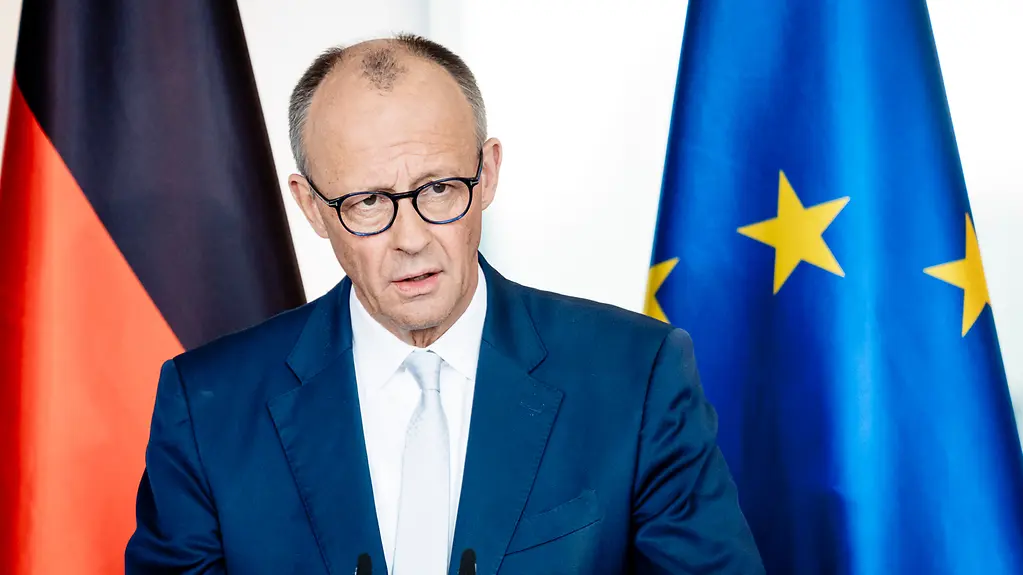
Following the ceasefire in Iran, Federal Chancellor Merz is now expecting difficult negotiations for lasting peace.
Photo: Federal Government/Steffen Kugler
There is a chance of peace in the Middle East – even if this peace is still a long way off. Federal Chancellor Merz emphasised this in a press statement. He said that Germany was trying to exert its influence. “We are prepared to take responsibility for stabilising peace, if it succeeds”, said Merz. The situation there also requires responses from us – not least to the dramatic rise in energy costs caused by this war, said the Chancellor.
The Federal Government had, he said, reacted quickly with an initial legislative package tightening competition law in particular. It was also intensively examining further measures in the event that prices continue to rise over a prolonged period. “We are indeed facing major challenges that we must overcome together”, emphasised Merz. “The Federal Government is determined to act in solidarity, knowing full well that we still have a long and difficult road ahead of us in the coming weeks and months.”
The most important points in brief:
- War in Iran: “We have seen the first ray of hope at diplomatic level”, said Federal Chancellor Merz after the ceasefire agreement between the USA and Iran. The Chancellor went on to say that, for the first time since the start of the war, a window of opportunity had opened for a negotiated solution – even if the ceasefire in the region was fragile. The Federal Government, he said, wanted to continue its diplomatic support for the chance of peace. In coordination with the USA and its European partners, it was now also resuming talks with Tehran.
- Strait of Hormuz: “Above all, we need a sustainable agreement that restore freedom of movement for ships in the Strait of Hormuz”, said the Chancellor. Germany, he said, was prepared to ensure freedom of movement for ships after a peace agreement if there was a mandate and a viable concept for this.
- Lebanon: Federal Chancellor Merz has asked Israel to end the further intensified attacks in Lebanon. He fears that the harshness with which Israel is waging war could jeopardise peace efforts. Merz reported that he is also in personal contact with Israeli Prime Minister Benjamin Netanyahu.
- Measures against rising prices: After the ceasefire began, said Merz, oil and gas prices fell by 10 percent and petrol station prices by 3 cents. However, even in the event of a permanent ceasefire process, tense markets and rising prices are still to be expected, said the Chancellor. Merz reported that the Federal Government was therefore examining further measures in case prices continue to rise over a prolonged period.
Read the transcript of the press statement here (in German only):