Popular uprising on 17 June 1953
The German government pays tribute to the victims of the popular uprising on 17 June 1953 in what was then the GDR. At least 55 protestors were killed during the uprising 62 years ago. The government will hold a commemorative ceremony on 17 June 2015 at the memorial site for the victims of the popular uprising.
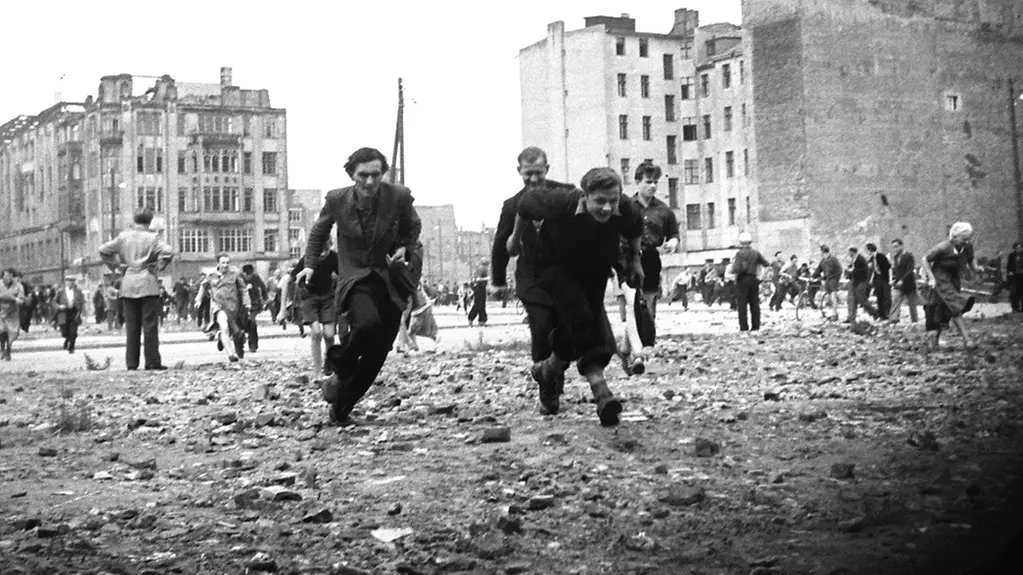
Within a few hours the protests spread throughout the German Democratic Republic
Photo: Bundesregierung/Perlia-Archiv
Once again this year the German government will remember those who lost their lives on 17 June 1953. On the 62nd anniversary of the uprising, Federal Labour Minister Andrea Nahles will honour the victims. She will speak at the memorial to the victims of the workers’ protests against the East German regime in Berlin’s Seestrasse Cemetery. This will be followed by a wreath-laying ceremony.
The desire for liberty
"The popular uprising on 17 June 1953 impressively demonstrates that the desire for liberty cannot be stamped out – not in East Germany, not in Budapest in 1956, not in Prague in 1968, and not in Poland in 1981. A political system can only survive in the long term if it gives people scope to develop freely, in fact when it encourages people to use liberty responsibly for themselves and for others," said Chancellor Angela Merkel in 2013, on the 60th anniversary of the protests.
The uprising on 17 June 1953
Almost four years after the German Democratic Republic was founded, dissatisfaction was rife among the people. Food supplies were poor, queues in front of shops long, and the state refused them any chance to form their own opinions or make their own decisions. Then, the East German regime increased working norms, which was effectively equivalent to reducing wages. It was the workers above all who felt disadvantaged by these policies. The construction workers in East Berlin’s Stalinallee, the prestige project of the SED, the party in power in East Germany, walked out on strike.
Within a matter of hours the protests spread. The striking workers called for free elections, reunification and the removal of Walter Ulbricht’s government. The uprising spread throughout the country: in more than 700 towns and cities across the German Democratic Republic workers joined the strike and protested. About one in ten workers were involved.
The SED leadership finally called in Soviet troops to crush the uprising. A total of 20,000 Soviet troops were in action, supported by 8,000 members of the "kasernierten Volkspolizei", the precursor to the East German National People’s Army (NVA). At least 55 people were killed, and 1,600 were handed down prison sentences, some long.